


 English
 Türk
Türk
SEARCH
HOT PRODUCTS
Newsletter
Manual Reset Limit Thermostat Applications in Industrial Heating Safety Systems
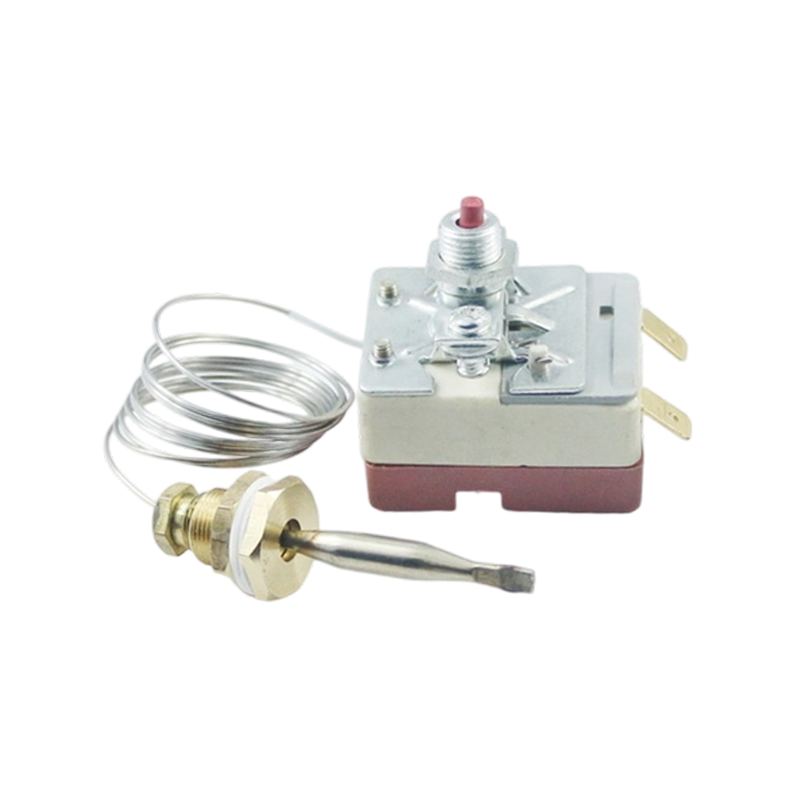
Industrial heating processes rely on layers of protection to prevent equipment damage and fire hazards. Among these layers, the Manual Reset Limit Thermostat occupies a critical position. Unlike ordinary temperature controllers that regulate normal operation, this device acts as a non‑resettable (without human action) backup.
Commercial Cooking Equipment
Deep fryers, griddles, and large ovens in commercial kitchens operate at high temperatures. A fryer’s heating elements can reach temperatures far above the oil’s smoke point if the main thermostat fails. A Manual Reset Limit Thermostat mounted near the heating elements or on the fryer tank will open the circuit when an unsafe temperature is detected. The kitchen staff must then locate the reset button, which is often behind a panel. This action prompts them to check for low oil levels, dirty filters, or a failed circulating pump before resuming cooking.
Industrial Ovens and Dryers
Batch ovens used for curing coatings or drying bulk materials can develop hot spots if airflow is blocked. In such systems, a manual reset limit switch is placed in the air stream or on the heater housing. If the temperature rises beyond the normal process range, the limit opens and shuts down the heating system. The operator must investigate the cause – for instance, a failed recirculation fan or a clogged exhaust duct – before resetting. This protocol prevents the oven from running unattended with a known fault.
Plastic and Rubber Processing
Extruders, injection molding machines, and heated platens use band heaters or cartridge heaters. A loss of temperature control can degrade the material or damage the barrel. A Manual Reset Limit Thermostat is often wired in series with the heater contactor’s coil. It is set just above the process temperature. If the main controller fails in a closed state, the limit device trips and requires a manual reset. This gives the operator a clear signal that something unusual occurred, rather than allowing the machine to continue heating until a meltdown occurs.
HVAC Systems with Electric Heat
Duct heaters and unit heaters with electric resistance elements are required by many codes to have a manual reset limit device. The limit sensor is placed downstream of the heater or on the heater face. If the airflow drops (due to a fan failure or a dirty filter), the heater can overheat quickly. The manual reset limit opens and stays open. A service technician must then inspect the airflow and the filters before pressing the reset. This arrangement is widely accepted as a reliable safety measure.
Why Manual Reset Is Preferred in Industry
Industrial environments often operate around the clock. An auto‑reset limit might cycle on and off many times without anyone noticing, eventually causing contactor welding or fire. A manual reset device demands attention. It also simplifies troubleshooting: when a machine stops, and the reset button is popped, the technician knows immediately that an over‑temperature event occurred. This directed diagnostic saves time compared to searching for an intermittent fault.
Installation Considerations
When installing a Manual Reset Limit Thermostat in an industrial panel, the device should be placed where the reset button is accessible but not easily bumped. The sensor location must represent the hottest area under fault conditions. Wiring should follow the manufacturer’s instructions, typically using a circuit that interrupts the control voltage to the main contactor. Multiple limit devices can be wired in series for redundant protection.
Industrial heating safety systems depend on manual reset limits to provide a reliable, human‑verified response to over‑temperature events. Their application spans many industries, each benefiting from the same basic principle: a device that requires a person to acknowledge a fault before restarting.
OUR PRODUCTS
Recommended Products



PLEASE LEAVE YOUR SPECIFIC REQUIREMENT

QUICK LINKS
PRODUCTS
CONTACT
-
+86-15957748531
+86-15558959105
+86-19588099846
+86-18815077137 -
jilly@wzleh.com
east@wzleh.com
scott@wzleh.com
kim@wzleh.com
ADDRESS
- STI Park #B-2, Hongqiao Yueqing City, Zhejiang, China, 325608


Leheng Thermostat Factory
Copyright © Wenzhou Leheng Technology Co., Ltd. All Rights Reserved.