


 English
 Türk
Türk
SEARCH
HOT PRODUCTS

Newsletter
Why Does A PCB Digital Thermostat Show Different Temperatures?
A factory electrician was checking an electrical cabinet during a summer inspection when he noticed something strange.
The display on the pcb digital thermostat showed 36°C.
A portable temperature meter showed 32°C.
A third technician used another instrument and got a result somewhere in between.
For a few minutes, the discussion had nothing to do with production equipment. Everyone was trying to decide which number was actually correct.
The interesting part is that situations like this are not unusual.
People often expect temperature to behave like a fixed number. In practice, it behaves more like a moving target.
Four Degrees Can Exist In The Same Cabinet
Open an electrical enclosure and look inside.
There may be a power supply near the top.
Several relays mounted in the middle.
Terminal blocks near the bottom.
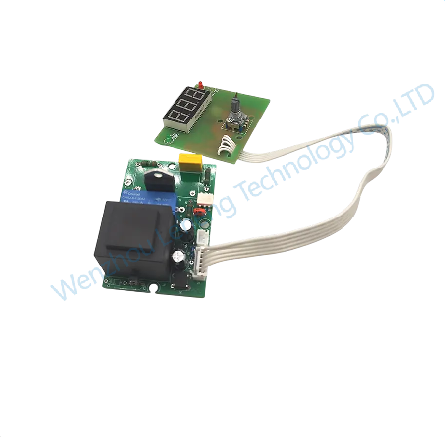
Now measure the temperature in three different locations.
The numbers will probably not match.
Heat does not spread instantly or evenly.
A component carrying current for several hours creates a small pocket of warmer air around itself. Another area of the cabinet may remain noticeably cooler.
Because of this, a pcb digital thermostat is really reporting conditions at its own location rather than describing the entire enclosure.
The reading is local.
Many service calls start when people forget that detail.
The Fan Changed More Than The Temperature
One maintenance team shared an interesting experience after replacing a cooling fan.
The goal was simple: improve airflow inside the cabinet.
The new fan worked exactly as expected.
Temperatures dropped.
The surprising part was that the thermostat reading changed by almost three degrees compared with previous operating data.
Nothing was wrong with the thermostat.
The airflow pattern had changed.
Air that once collected around the sensor was now being pushed elsewhere.
The equipment generated the same amount of heat as before, yet the displayed number looked different.
This is one reason technicians often examine airflow before questioning a pcb digital thermostat.
Afternoon Complaints Were More Common
Another pattern appears in outdoor installations.
Service records sometimes show that temperature-related complaints arrive during similar periods of the day.
Morning operation looks normal.
The afternoon reading appears unusually high.
At first, operators suspect the control system.
After inspection, sunlight often becomes part of the explanation.
Even when a cabinet remains closed, solar heat can influence internal conditions.
A sensor mounted near one side of the enclosure may experience a different environment from another sensor located only a short distance away.
The thermostat simply reports what it experiences.
What Technicians Usually Check First
Interestingly, experienced electricians rarely begin by replacing the controller.
They start by looking around.
Where is the sensor installed?
Has anything been added inside the cabinet recently?
Did somebody reroute cables?
Was a fan replaced?
Has the ventilation opening become blocked by dust?
Questions like these frequently guide to answers faster than swapping components.
A pcb digital thermostat is often blamed when temperature readings look unusual, but many investigations end with a different conclusion. The displayed number may not be wrong at all. It may simply reflect changes in airflow, equipment layout, or operating conditions that developed gradually over time.
That is why temperature troubleshooting often begins with observation rather than replacement. Understanding what changed around the sensor can be more useful than focusing on the display itself.
OUR PRODUCTS
Recommended Products

PLEASE LEAVE YOUR SPECIFIC REQUIREMENT

QUICK LINKS
PRODUCTS
CONTACT
-
+86-15957748531
+86-15558959105
+86-19588099846
+86-18815077137 -
jilly@wzleh.com
east@wzleh.com
scott@wzleh.com
kim@wzleh.com
ADDRESS
- STI Park #B-2, Hongqiao Yueqing City, Zhejiang, China, 325608


Leheng Thermostat Factory
Copyright © Wenzhou Leheng Technology Co., Ltd. All Rights Reserved.