


 English
 Türk
Türk
SEARCH
HOT PRODUCTS
Newsletter
Why Won't A Manual Reset Thermostat Safety Limiter Restart?
A service technician was called to inspect a commercial heating unit that had suddenly stopped operating.
The control panel still had power.
The wiring looked normal.
No obvious component damage could be found.
Yet the system refused to restart.
After nearly twenty minutes of checking relays, sensors, and power connections, the technician noticed a small button that had not been touched.
A quick manual reset brought the unit back to life.
The equipment was running again, but a more important question remained.
Why had the shutdown happened in the place?
Situations like this are surprisingly common. When a manual reset thermostat safety limiter interrupts operation, many people focus on restoring the equipment as quickly as possible. Experienced technicians usually take a different approach.
They want to know what triggered the limiter before pressing the reset button.
The Shutdown Is Often A Symptom
A temperature limiter rarely acts without a reason.
In many cases, the limiter is simply the component to react to a problem developing elsewhere in the system.
Several years ago, a maintenance contractor shared an example involving a heating cabinet used in an industrial workshop.
Operators reported occasional shutdowns during busy production periods.
Nothing unusual appeared during brief inspections.
The equipment restarted and continued running normally.
Only after a longer observation period did the cause become clear.
Dust had gradually restricted airflow through part of the heating section.
The temperature rise was small.
The effect accumulated slowly.
Eventually, the manual reset thermostat safety limiter responded before more serious overheating could occur.
The Cause May Have Started Months Earlier
One challenge with temperature-related faults is timing.
Electrical failures often happen immediately.
Thermal problems can develop over weeks or months.
A fan begins slowing down.
A filter collects dust.
A ventilation opening becomes partially blocked.
Additional equipment is installed nearby.
Each change appears minor when viewed alone.
Together, they alter operating conditions.
By the time the limiter trips, the original cause may no longer seem obvious.
This is why experienced service personnel often ask what changed recently inside the equipment room.
The answer is not always found inside the limiter itself.
A Reset Button Can Hide The Real Problem
Many operators are familiar with the sequence.
The machine stops.
Someone presses the reset button.
Production resumes.
Everything appears normal.
The danger is that repeated resets can create the impression that the problem has been solved.
In reality, the underlying condition may still exist.
Maintenance records frequently show the same equipment experiencing multiple limiter trips before the actual cause is investigated.
One technician described a case where a heater operated normally for several weeks after each reset.
Because the shutdowns were infrequent, nobody considered them urgent.
The eventual cause turned out to be a ventilation fan that was beginning to fail under load.
The manual reset thermostat safety limiter was repeatedly reacting to a problem that had not yet become obvious elsewhere.
What Technicians Usually Check First
When a limiter trips, experienced technicians often begin with simple observations.
Is airflow different from normal?
Has dust accumulated around cooling paths?
Are fans operating correctly?
Has equipment been added nearby?
Has the surrounding environment changed?
These questions frequently produce useful clues before any components are replaced.
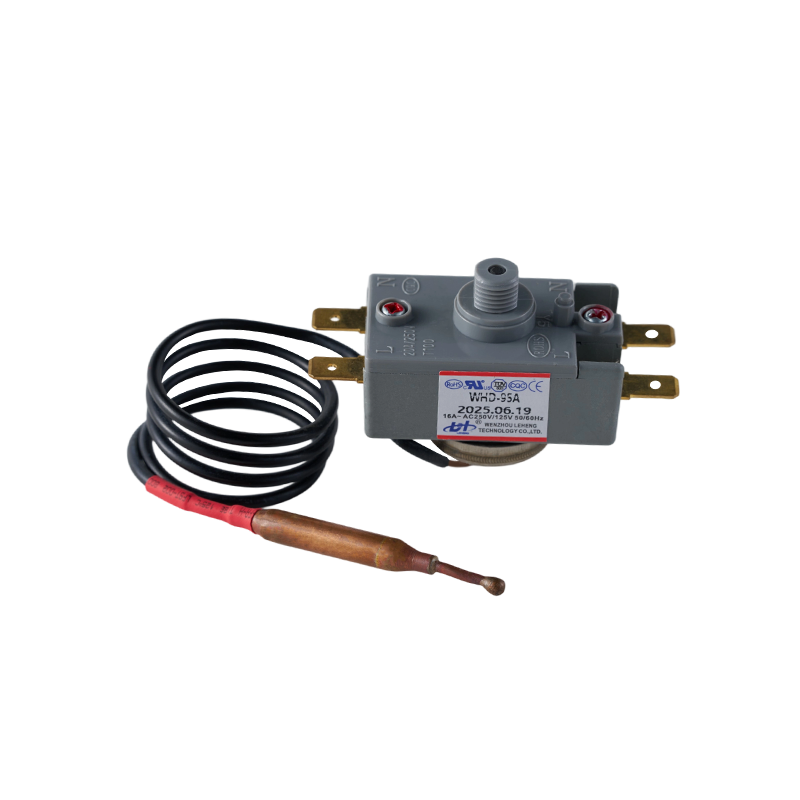
A manual reset thermostat safety limiter is designed to interrupt operation when temperatures move beyond expected limits. Because it requires manual intervention, it also encourages investigation rather than automatic restarting. That small difference often helps maintenance teams discover developing issues before they create larger repairs.
In many service situations, the limiter itself is not the problem. It is simply the component to reveal that something inside the system deserves closer attention.
OUR PRODUCTS
Recommended Products


PLEASE LEAVE YOUR SPECIFIC REQUIREMENT

QUICK LINKS
PRODUCTS
CONTACT
-
+86-15957748531
+86-15558959105
+86-19588099846
+86-18815077137 -
jilly@wzleh.com
east@wzleh.com
scott@wzleh.com
kim@wzleh.com
ADDRESS
- STI Park #B-2, Hongqiao Yueqing City, Zhejiang, China, 325608


Leheng Thermostat Factory
Copyright © Wenzhou Leheng Technology Co., Ltd. All Rights Reserved.