


 English
 Türk
Türk
SEARCH
HOT PRODUCTS

Newsletter
How Does Limit Temperature Controller React In Heating Systems?
Limit Temperature Controller is often observed in heating systems where temperature stability is not only a performance requirement but also a safety constraint. In many industrial environments, its behavior is not evaluated in isolation, but during system operation when heating cycles fluctuate under different load conditions.
In heating assemblies, a heating safety control module is usually installed as a protective layer that reacts only when temperature shifts exceed expected operating range.
Temperature Rise Does Not Follow A Perfect Curve
During heating operation, temperature increase is not always smooth.
Some systems heat gradually.
Others show faster initial rise followed by slower stabilization.
These differences are usually influenced by load distribution, heating element layout, and surrounding insulation conditions.
In many test environments, the response of a Limit Temperature Controller is only noticeable when temperature approaches threshold levels.
Trigger Point Behavior Appears During Load Variation
In real operation, heating load is not constant.
Material density may change.
External environment may affect heat dissipation.
Power input may fluctuate slightly.
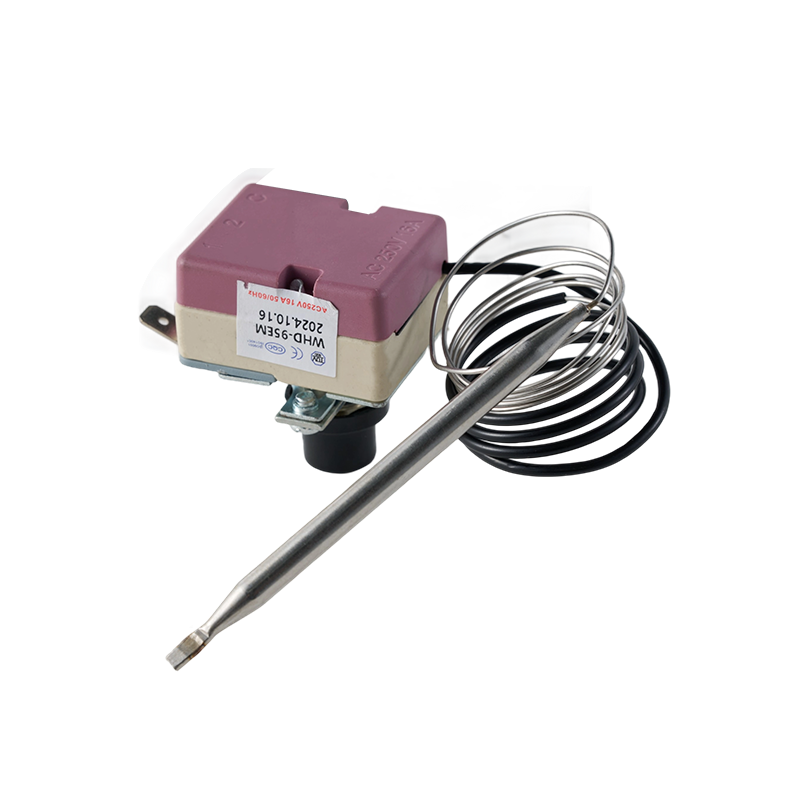
When these factors combine, temperature may approach limit values at different speeds.
At this stage, a heating safety control module begins to show functional response by adjusting or interrupting heating flow depending on system configuration.
Thermal Lag Is Common In Real Systems
Temperature sensors do not always reflect immediate changes.
There is often a delay between actual heat generation and measured feedback.
This lag creates temporary mismatch between system output and controller response.
Operators sometimes observe that a Limit Temperature Controller reacts after visible surface temperature changes have already started to stabilize.
Heating Distribution Is Rarely Uniform
Inside heating systems, temperature is not evenly distributed.
Some zones heat faster.
Some remain slightly cooler due to airflow or structural spacing.
This uneven distribution can create localized hotspots that influence how a heating safety control module evaluates system conditions.
Repeated Heating Cycles Influence Response Pattern
In continuous operation, heating does not occur only once.
It repeats in cycles.
Heat rises.
Then stabilizes.
Then rises again.
Over time, response patterns of a Limit Temperature Controller may appear more frequently depending on cycle length and intensity.
Sensor Position Affects Perceived Stability
The position of temperature sensing points plays a key role.
Sensors placed near heating elements detect changes earlier.
Sensors placed further away respond more slowly.
This spatial difference creates variation in system reaction timing, especially when evaluating a heating safety control module under real installation conditions.
Power Fluctuation Influences Control Activity
In many industrial environments, power input is not perfectly stable.
Slight voltage variation may occur during operation.
These small fluctuations can influence heating rate.
As a result, temperature may cross threshold levels earlier or later than expected, affecting when a Limit Temperature Controller becomes active.
Environmental Cooling Changes System Balance
External conditions such as airflow, ambient temperature, and enclosure design influence heat retention.
Some systems lose heat quickly.
Others retain temperature longer due to insulation.
These environmental differences affect how frequently a heating safety control module engages during normal operation cycles.
System Response Is Observed Over Time
In practice, engineers rarely evaluate response at a single moment.
They observe multiple heating cycles.
Compare activation timing.
Check recovery behavior after cooling.
These repeated observations help determine how consistently a Limit Temperature Controller performs across different operating conditions.
Stability Is Defined By Repeated Behavior
Heating systems are not judged by one activation event.
They are judged by consistency across many cycles.
Whether temperature control triggers remain stable.
Whether the system returns to normal operation smoothly.
Whether repeated heating behaves predictably under similar conditions.
These long-term observations define how a Limit Temperature Controller is understood in real industrial usage rather than theoretical description.
OUR PRODUCTS
Recommended Products



PLEASE LEAVE YOUR SPECIFIC REQUIREMENT

QUICK LINKS
PRODUCTS
CONTACT
-
+86-15957748531
+86-15558959105
+86-19588099846
+86-18815077137 -
jilly@wzleh.com
east@wzleh.com
scott@wzleh.com
kim@wzleh.com
ADDRESS
- STI Park #B-2, Hongqiao Yueqing City, Zhejiang, China, 325608


Leheng Thermostat Factory
Copyright © Wenzhou Leheng Technology Co., Ltd. All Rights Reserved.