


 English
 Türk
Türk русский
 한국어
한국어 Deutsch
 日本語
日本語 dansk
dansk Français
SEARCH
HOT PRODUCTS
Newsletter
WHD-200B Capillary Tube Thermostat for Ovens and Fryers
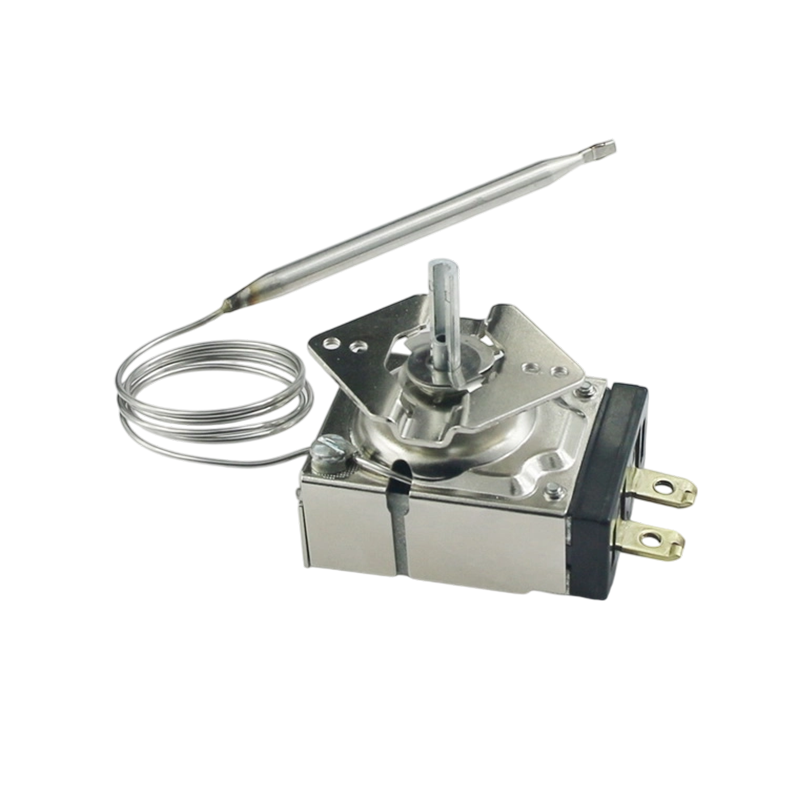
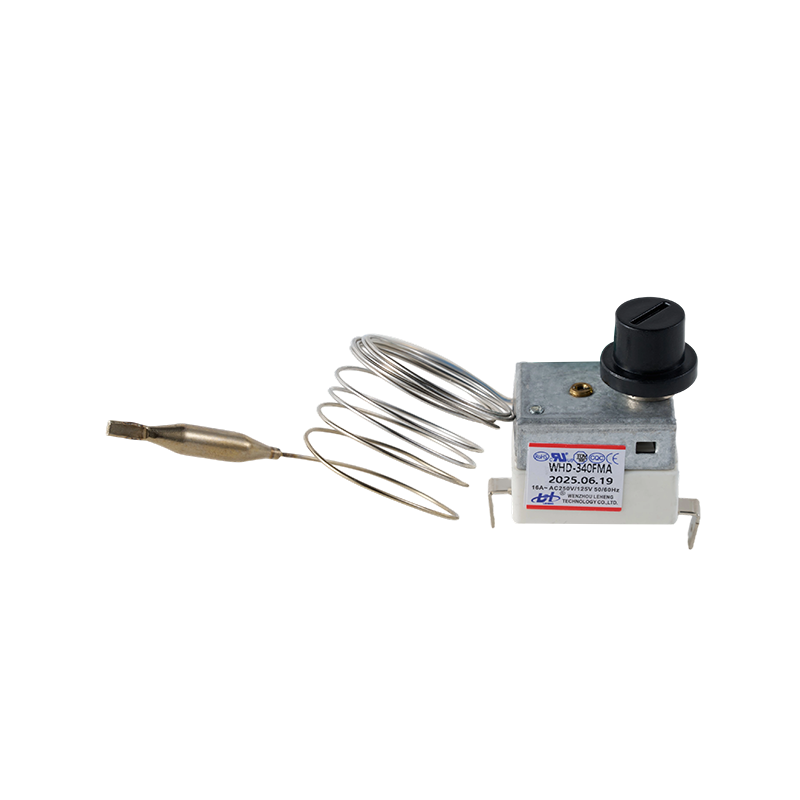
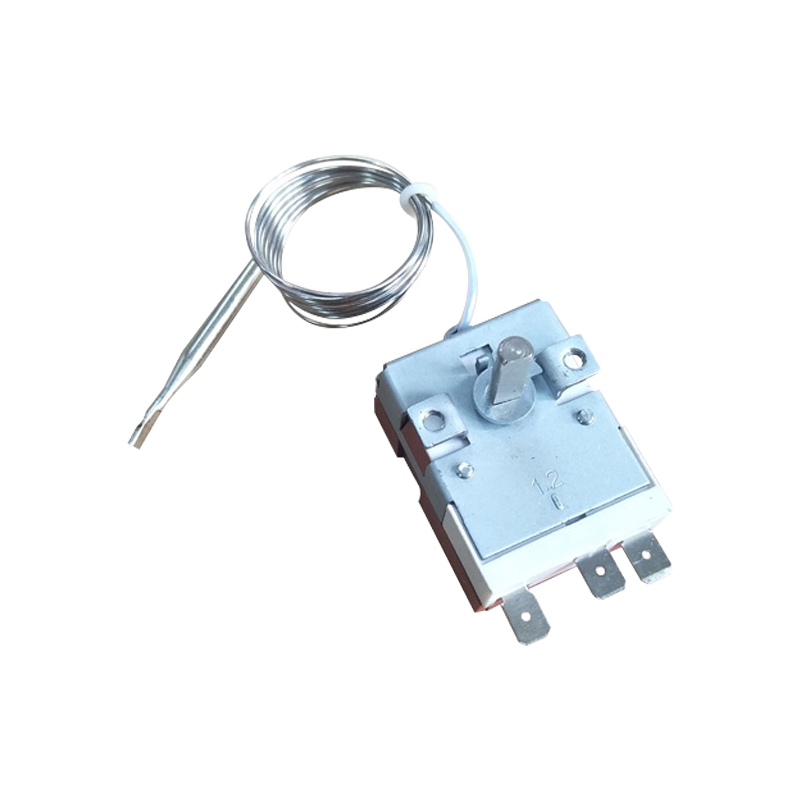
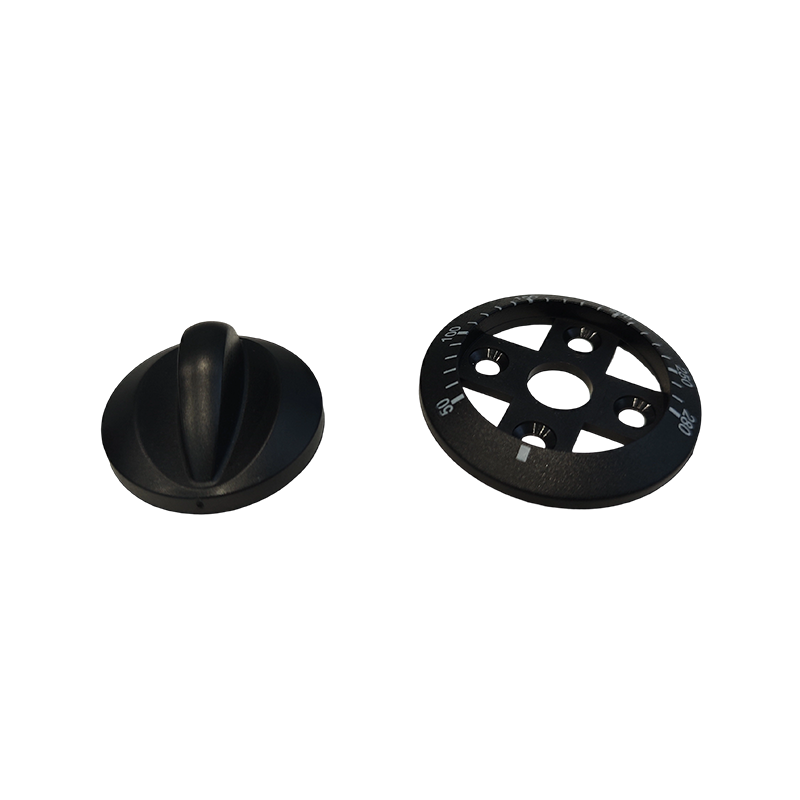
Temperature control is an important part of heating equipment used in commercial kitchens and industrial applications. The WHD-200B capillary tube thermostat is designed for adjustable temperature control within a 0–200°C range, making it relevant to equipment such as ovens and fryers. Its mechanical design combines a temperature-sensing bulb, a capillary tube, and an adjustable control knob in one unit, and it operates without a circuit board or digital display.
The way the WHD-200B capillary tube thermostat works is straightforward. The sensing bulb and capillary tube are sealed and filled with a liquid that expands as it heats up. Once that expansion reaches the point set on the control knob, it physically trips the internal switch and cuts power to the heating element. When the equipment cools back down, the switch resets and heating resumes automatically, without anyone needing to intervene by hand.
The 0–200°C range covered by the WHD-200B capillary tube thermostat sits within the operating band used by most commercial kitchen heating equipment, including electric and gas ovens, deep fryers, air fryers, griddles, and food warmers. The adjustable knob allows the working temperature to be set within this range according to the equipment it is installed on, rather than fixing the WHD-200B capillary tube thermostat to a single trip point. This is what allows the same basic unit to be set differently depending on whether it is controlling a fryer running hot oil or a food warmer holding a lower, steady temperature.
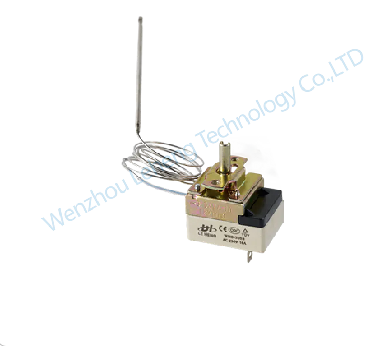
On the structural side, the thermostat uses a 6mm-diameter sensing bulb, with bulb length varying according to the temperature range ordered, and a capillary tube available from 300mm to 2000mm depending on the distance between the sensing point and the control head. The switch differential is 2–12°C, meaning the gap between the temperature that trips the switch off and the temperature at which it resets can fall anywhere in that range depending on the specific unit. Electrically, the WHD-200B capillary tube thermostat is rated AC250V at 16A, with a maximum resistance temperature of T125. These structural details are what define how the thermostat is physically mounted and wired on a given piece of equipment, since the bulb has to reach the point being monitored and the capillary tube has to run between that point and the knob.
Because the sensing bulb and the control knob are connected only by the capillary tube rather than an electronic cable, the two parts do not need to sit next to each other on the equipment. On a deep fryer, for example, the bulb can sit down in the oil while the knob stays on the front panel where it is easy to reach. On an oven or a small drying chamber, the same separation lets the bulb sit inside the heated compartment while the control knob stays outside it. This is a basic feature of capillary thermostats generally, and it is one reason the same mechanical design shows up across such a wide range of equipment types.
Beyond ovens and fryers, the WHD-200B capillary tube thermostat is also used on griddles, hot plates, and food warmers in commercial kitchens, as well as roasting and baking ovens, where the sensing bulb sits close to the heating surface or heated cavity and the knob is mounted on an accessible panel. In industrial settings, the same thermostat is applied to small drying ovens, heat-setting and mold-heating equipment, and pipe or tubing heaters, along with small laboratory heating chambers where a manually adjustable trip point is preferred over digital control. It also appears on electric pans, high-temperature heating tables, and some high-temperature water boilers and cleaning equipment, where the same basic liquid-expansion mechanism and knob adjustment apply regardless of the specific machine it is wired into.
As a mechanical, knob-adjustable unit, the WHD-200B capillary tube thermostat remains one of Leheng's established models for heating equipment that calls for a manually set temperature range rather than digital control. Its 0–200°C span covers the working temperatures used across ovens, fryers, and the other kitchen and industrial equipment it is installed on, and the same bulb, capillary, and switch design is shared across all of these applications regardless of which specific machine it ends up wired into. The core components — sensing bulb, capillary tube, switch, and control knob — stay the same from one installation to the next, with only the bulb length, capillary length, and set temperature adjusted to match the equipment in question.
OUR PRODUCTS
Recommended Products


PLEASE LEAVE YOUR SPECIFIC REQUIREMENT

QUICK LINKS
PRODUCTS
CONTACT
-
+86-15957748531
+86-15558959105
+86-19588099846
+86-18815077137 -
jilly@wzleh.com
east@wzleh.com
scott@wzleh.com
kim@wzleh.com
ADDRESS
- STI Park #B-2, Hongqiao Yueqing City, Zhejiang, China, 325608


Leheng Thermostat Factory
Copyright © Wenzhou Leheng Technology Co., Ltd. All Rights Reserved.