


 English
 Türk
Türk
SEARCH
HOT PRODUCTS
Newsletter
How Heating Equipment Uses a Liquid Expansion Capillary Thermostat?
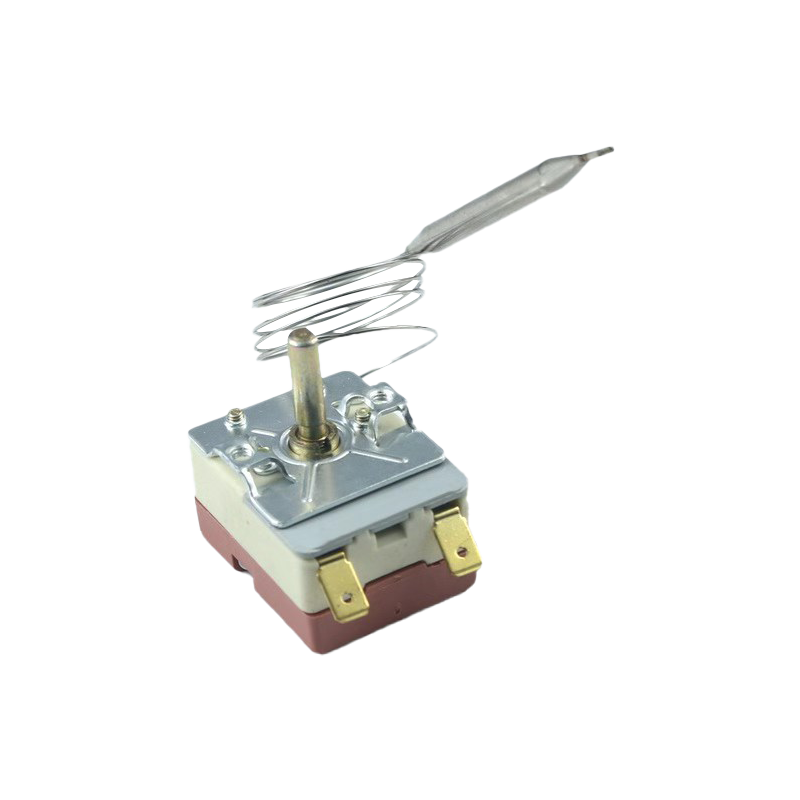
Heating equipment covers a wide range of applications, from bakery ovens and food warmers to household appliances and industrial heating systems. Although these machines work in different environments and at different temperatures, they share a basic requirement: the heating process needs to be switched and controlled according to the temperature reached by the equipment. This is one area where Liquid Expansion Capillary Thermostats continue to be used as a mechanical temperature-control solution.
Different Equipment, Different Temperature Requirements
A bakery proofing box does not operate in the same way as a fryer, while a rice steamer, garment steamer, and industrial heating oven each have their own temperature requirements. Some equipment is designed to maintain a relatively gentle and stable temperature, while other machines need higher-temperature heating during cooking, drying, or processing.
These differences also affect the way temperature control components are configured. A Liquid Expansion Capillary Thermostat needs to correspond to the working conditions of the equipment, while the sensing point has to be positioned where the actual temperature needs to be monitored. This is why the same basic Liquid Expansion Capillary Thermostat principle can be found across many different types of heating equipment.
Where Liquid Expansion Capillary Thermostats Are Used
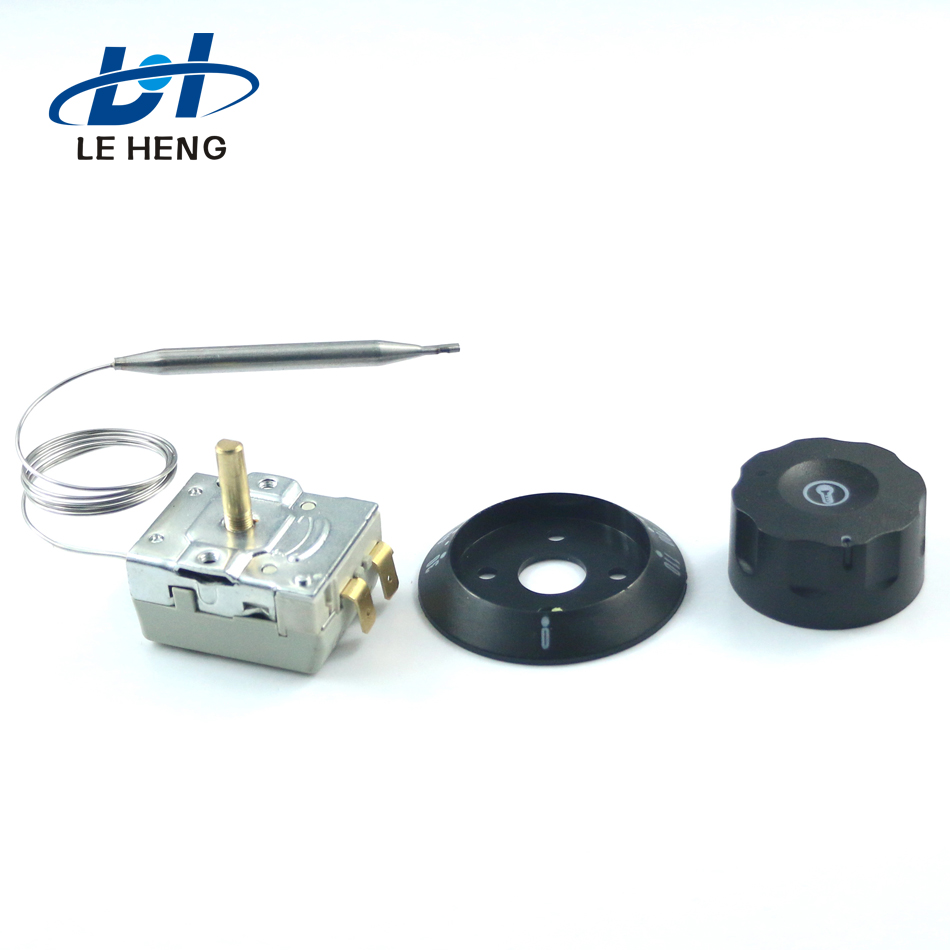
Liquid Expansion Capillary Thermostats are commonly associated with equipment that requires adjustable mechanical temperature control. In commercial kitchens, applications include electric ovens, bread ovens, proofing boxes, rice cookers, rice steamers, warming tables, fryers, water boilers, and milk heaters.
The same type of control also appears in selected household appliances. Garment steamers and ironing tables require temperature control around their heating surfaces, while fan heaters and electric heaters use thermostats to control heating cycles according to the operating temperature.
Industrial heating equipment provides another application area. Heating furnaces, mold heating equipment, heating and drying ovens, and other process equipment may require temperature sensing at a location separated from the control panel. In a Liquid Expansion Capillary Thermostat, a capillary connection allows the sensing probe and temperature-setting mechanism to be installed at different positions.
WHD-P Series as an Example
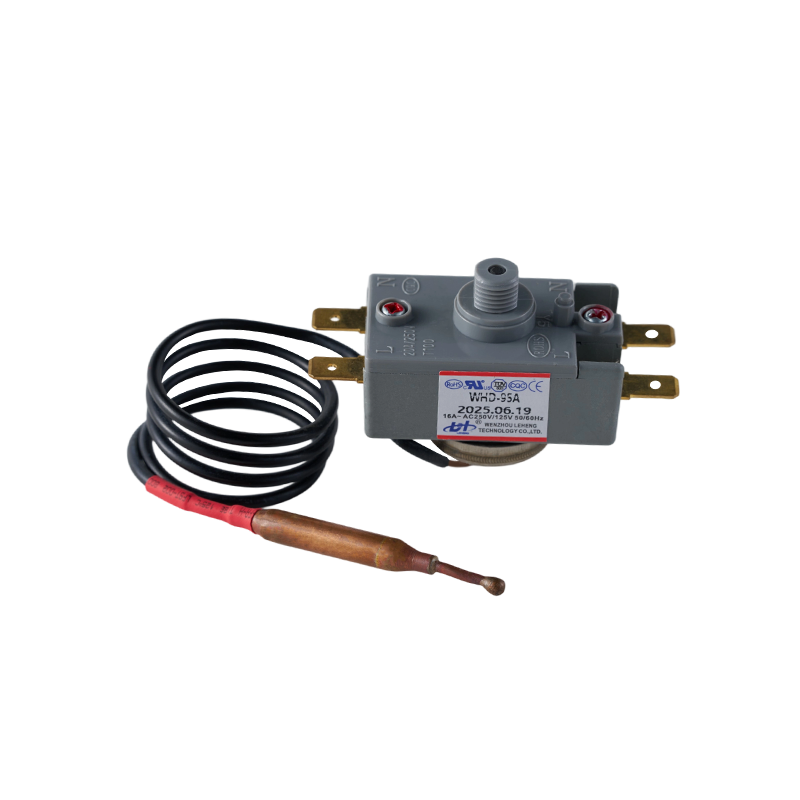
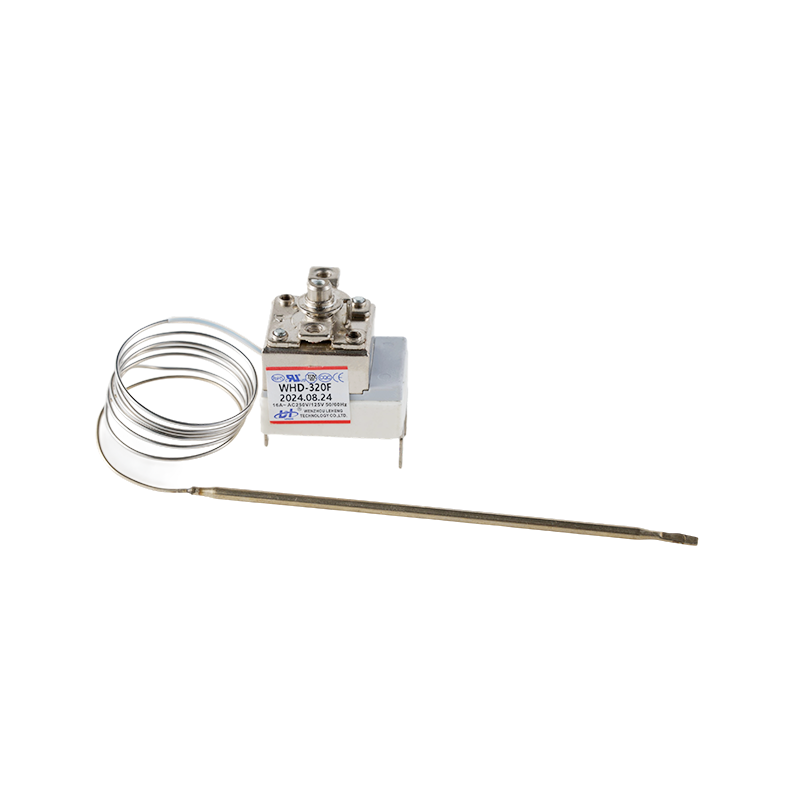
Leheng's WHD-P series is one example of a Liquid Expansion Capillary Thermostat used for heating equipment. The series is designed around a mechanical temperature-control structure consisting of a sensing probe, capillary tube, and adjustable knob. Its specifications can be configured for different equipment requirements, while the separated probe and control arrangement allows temperature to be sensed away from the position of the control knob.
The WHD-P series is used in applications including kitchen heating equipment, household appliances, and industrial heating equipment. These applications share the need for a Liquid Expansion Capillary Thermostat that can monitor temperature at the sensing point and control the heating cycle according to the selected setting.
The Role of Capillary Thermostats in Heating Equipment
The continued use of Liquid Expansion Capillary Thermostats across different heating applications is closely related to equipment design. In many machines, the temperature-sensing point is located inside an oven cavity, near a heating surface, or within another area that is separate from the operator control panel. A capillary tube provides the connection between the sensing probe and the thermostat mechanism without requiring the two parts to occupy the same position.
As heating equipment continues to vary by application, temperature-control components are likewise selected according to the working conditions and physical layout of each machine. Liquid Expansion Capillary Thermostats remain one of the mechanical solutions used in this area, with models such as the WHD-P series serving different heating equipment applications.



PLEASE LEAVE YOUR SPECIFIC REQUIREMENT

QUICK LINKS
PRODUCTS
CONTACT
-
+86-15957748531
+86-15558959105
+86-19588099846
+86-18815077137 -
jilly@wzleh.com
east@wzleh.com
scott@wzleh.com
kim@wzleh.com
ADDRESS
- STI Park #B-2, Hongqiao Yueqing City, Zhejiang, China, 325608


Leheng Thermostat Factory
Copyright © Wenzhou Leheng Technology Co., Ltd. All Rights Reserved.