


 English
 Türk
Türk
SEARCH
HOT PRODUCTS


Newsletter
A Manual Reset Temperature Controller Switch Won't Restart Itself
Automatic reset sounds convenient until the reason a circuit tripped is a genuine fault rather than a routine fluctuation, and a device that restarts itself under those conditions can send power right back into an unresolved problem. A manual reset temperature controller switch is built specifically to prevent that outcome, cutting power when a temperature limit is exceeded and requiring a person to physically confirm conditions are safe before the circuit can be restored. Equipment manufacturers who specify an automatic-reset device where a manual reset temperature controller switch was actually the safer choice often discover the gap only after a fault condition repeats itself unnoticed.
Why Requiring Human Intervention Is the Point, Not a Limitation
The core function of a manual reset temperature controller switch is straightforward: when temperature crosses a set limit, the device cuts the electrical circuit and stays cut off until someone manually resets it, rather than restoring power automatically once temperature drops back into a normal range. This design choice exists because an automatic reset device can cycle power on and off repeatedly if the underlying cause of overheating hasn't actually been resolved, potentially masking a fault that needs direct attention. Requiring manual intervention forces a person to verify the system is genuinely safe before restoring power, which matters especially in equipment where an unresolved fault could pose a real safety risk.
Reading the Temperature Range and Bulb Specifications
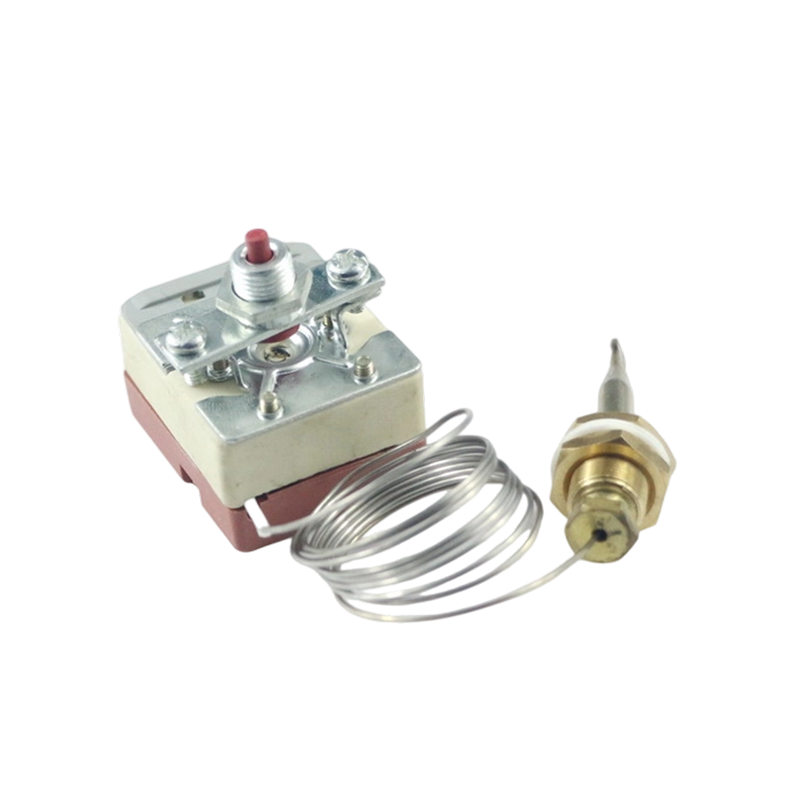
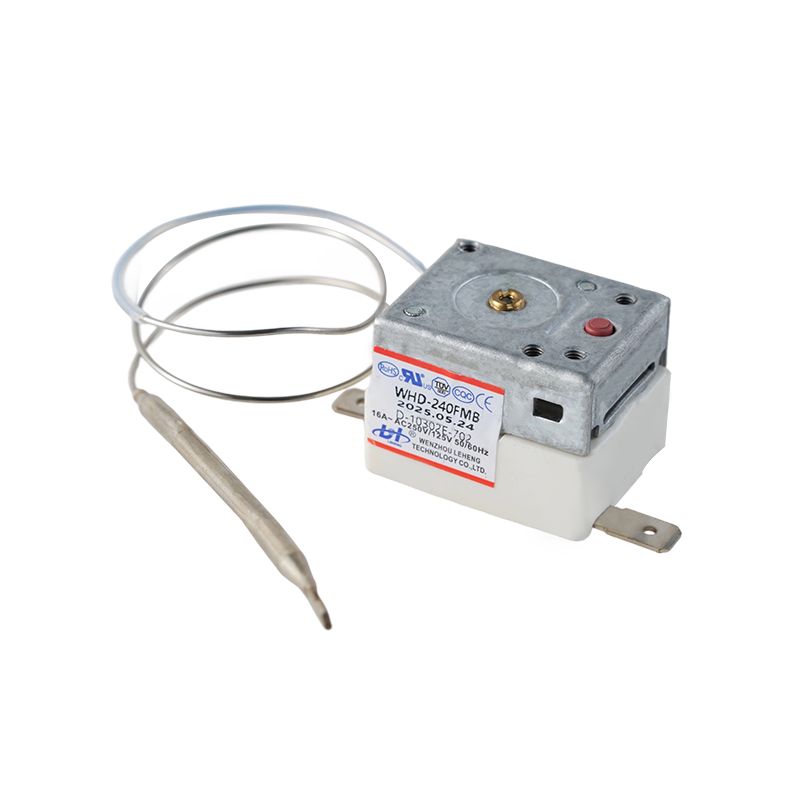
A manual reset temperature controller switch in this category commonly covers a temperature range spanning roughly 30 to 320°C, with the sensing bulb diameter typically around 6mm and bulb length varying depending on the specific temperature range a given model targets. Buyers should confirm which portion of this range their application actually needs, since a device rated across the full range may not offer the same precision at any single point within it as a device built specifically for a narrower band. Matching bulb dimensions to available mounting space in the target equipment is worth confirming early, since a bulb that doesn't physically fit the intended sensing location defeats the purpose regardless of how accurate its temperature rating is.
Why Capillary Length and On-Off Differential Matter
Capillary length on this switch type commonly ranges from 300 to 2000mm, giving buyers flexibility in how far the control head can sit from the actual sensing point, which matters when the mounting location for the control unit itself is physically separated from where temperature needs to be measured. The on-off temperature difference, typically in a 2 to 12°C range, determines how much temperature swing occurs before the switch responds, and buyers should match this differential to how tightly their application needs temperature controlled, since a wider differential reduces switching frequency but allows more temperature drift between cycles.
Application Areas Where This Switch Type Is Standard
Ovens, griddles, fryers, heaters, and boilers represent the core application range for a manual reset temperature controller switch, all equipment types where an unnoticed overheat condition carries real safety consequences rather than simply reduced performance. Buyers specifying this switch for a new equipment design should confirm the rated current handling, commonly in the 16A range at standard mains voltage, matches the actual heating element load in their specific equipment rather than assuming a general-purpose rating covers every application within this category. Equipment designers moving from an automatic-reset thermostat to a manual reset temperature controller switch on a given product line should budget extra design time for the reset access point itself, since the reset mechanism needs to be physically reachable by a technician or user rather than buried inside a sealed enclosure.
Comparing Reset Behavior Across Safety Device Types
|
Device Type |
Reset Behavior |
Suited For |
|
Manual reset switch |
Requires physical reset action |
Safety-critical overheat protection |
|
Automatic reset thermostat |
Resets automatically once temperature normalizes |
Routine temperature cycling, non-safety applications |
|
Fusible link limiter |
Permanent, requires component replacement |
One-time, high-severity fault protection |
Verifying Manual Reset Reliability Before Bulk Ordering
Buyers sourcing a manual reset temperature controller switch for safety-critical equipment should request cycle-testing data confirming the reset mechanism continues to function reliably after repeated trip-and-reset cycles, since a mechanism that sticks or fails to engage properly after extended use undermines the entire safety function the device exists to provide. Suppliers able to demonstrate this testing against the specific temperature range and current rating a buyer intends to use give a more accurate picture of long-term reliability than a general product description can offer alone.
OUR PRODUCTS
Recommended Products

PLEASE LEAVE YOUR SPECIFIC REQUIREMENT

QUICK LINKS
PRODUCTS
CONTACT
-
+86-15957748531
+86-15558959105
+86-19588099846
+86-18815077137 -
jilly@wzleh.com
east@wzleh.com
scott@wzleh.com
kim@wzleh.com
ADDRESS
- STI Park #B-2, Hongqiao Yueqing City, Zhejiang, China, 325608


Leheng Thermostat Factory
Copyright © Wenzhou Leheng Technology Co., Ltd. All Rights Reserved.