


 English
 Türk
SEARCH
HOT PRODUCTS

Newsletter
Why Heating Equipment Needs a High-Temperature Limit Protector?
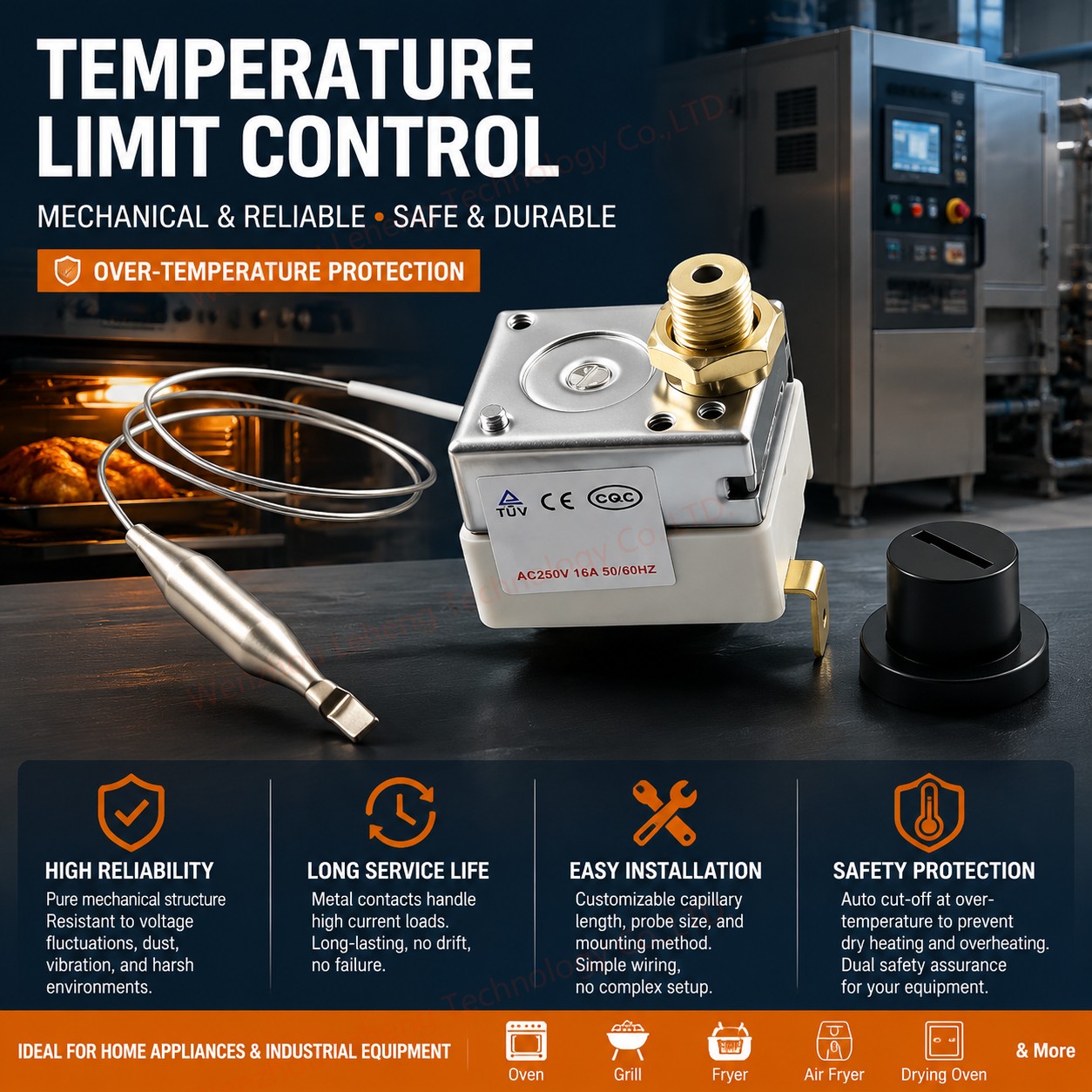
Electric heating is built into many everyday products, from household ovens to commercial fryers and small industrial heaters. In each of them, the heating element can keep raising the temperature if the main control fails or the load is lost. A high-temperature limit protector is the device that cuts the circuit at that point. It acts as an independent layer of over-temperature protection, separate from the control that sets the normal working temperature.
 |
 |
How a Safety Limiter Differs from a Thermostat
A thermostat holds a working temperature that the user selects. A safety limiter does not take part in that daily control. It stays idle during normal operation and acts only when the temperature passes a fixed limit.
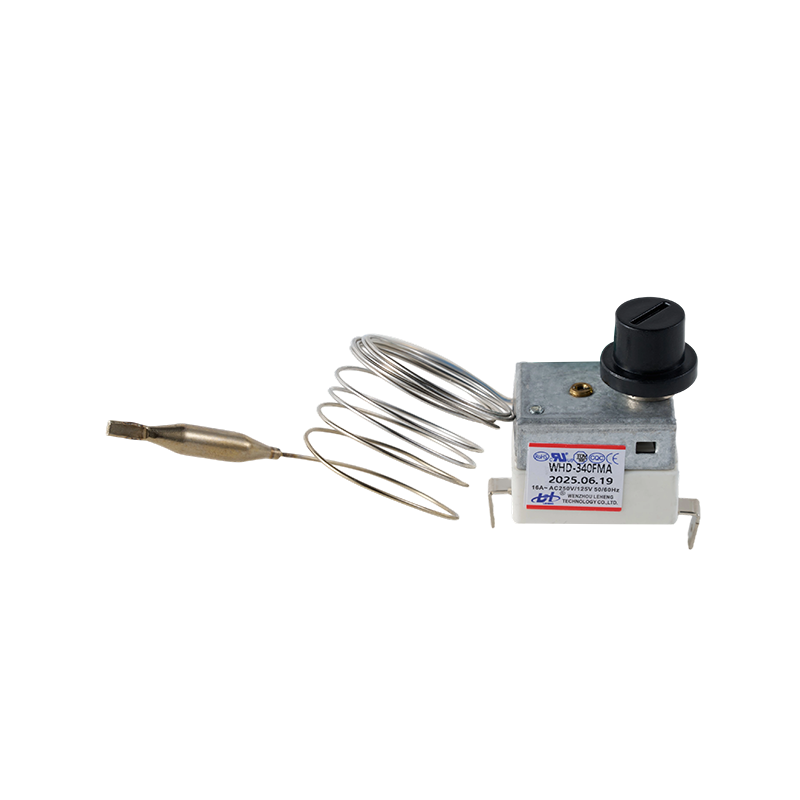
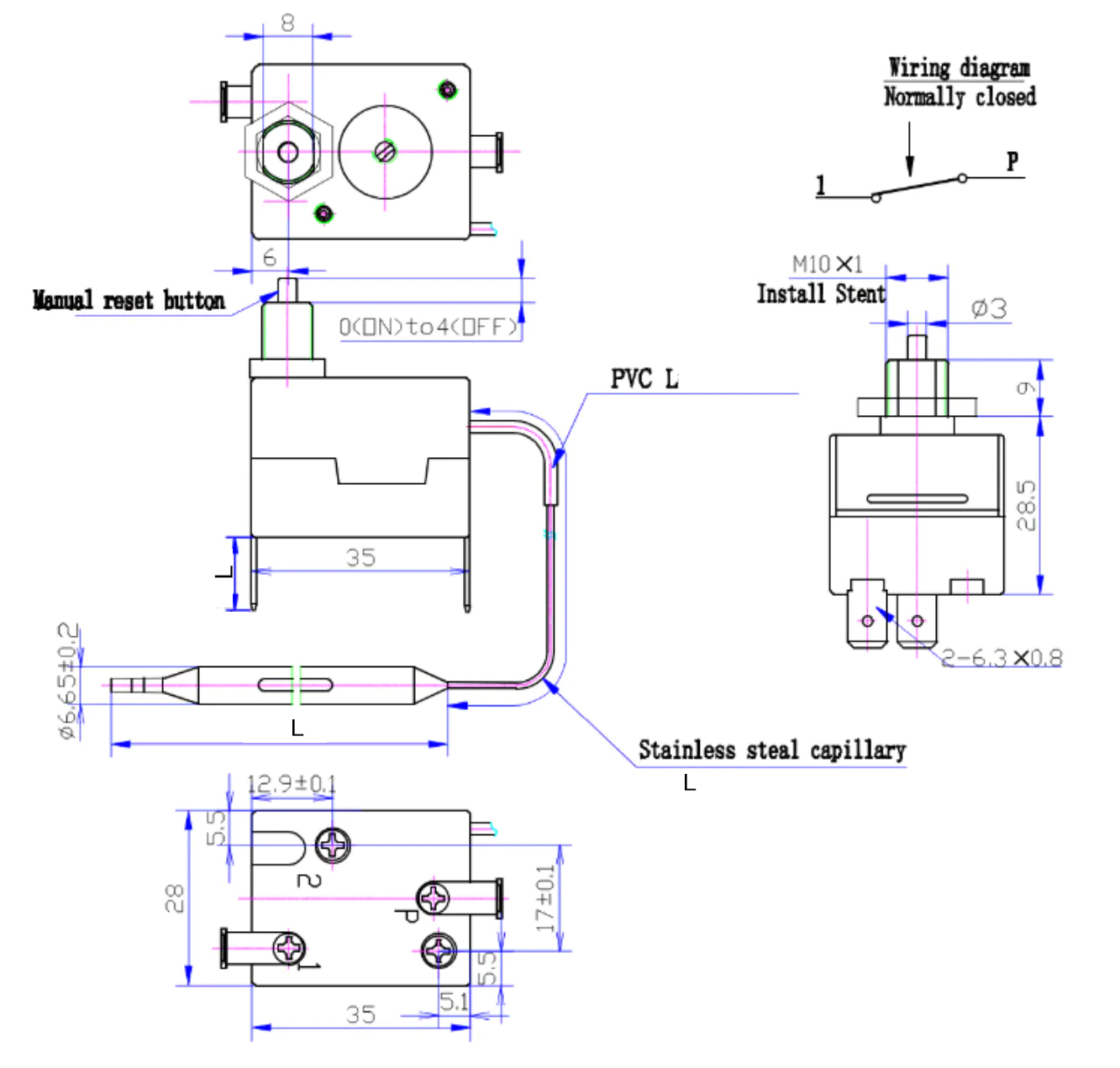
Many limiters are built as a manual reset thermostat. After the contacts open, they do not close again by themselves when the equipment cools down. Someone has to press the reset button once the cause of the fault has been checked. With this design, a faulty appliance cannot cycle on and off unnoticed, which an automatic reset can allow.
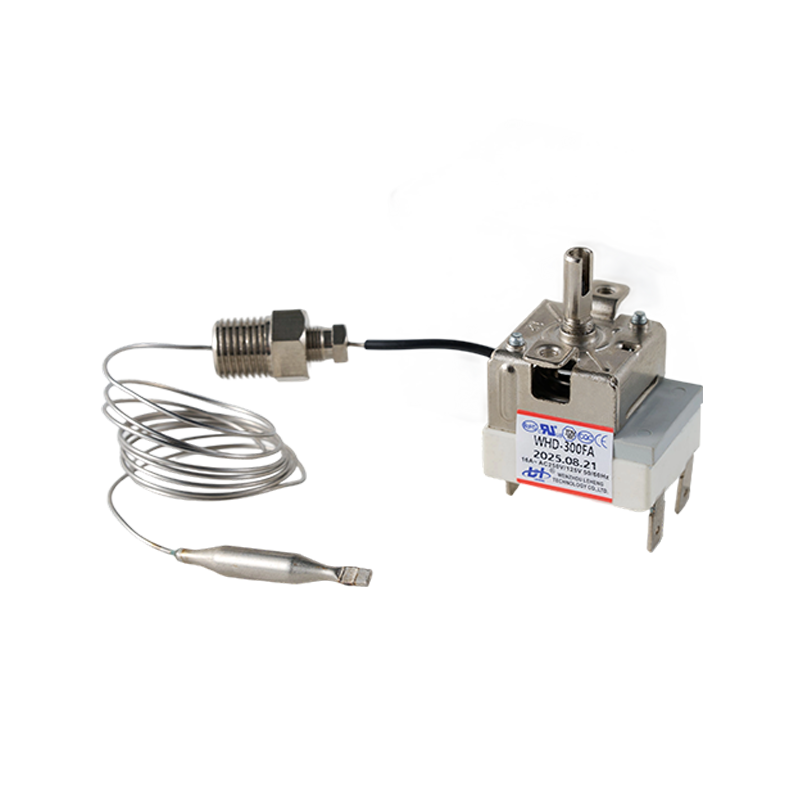
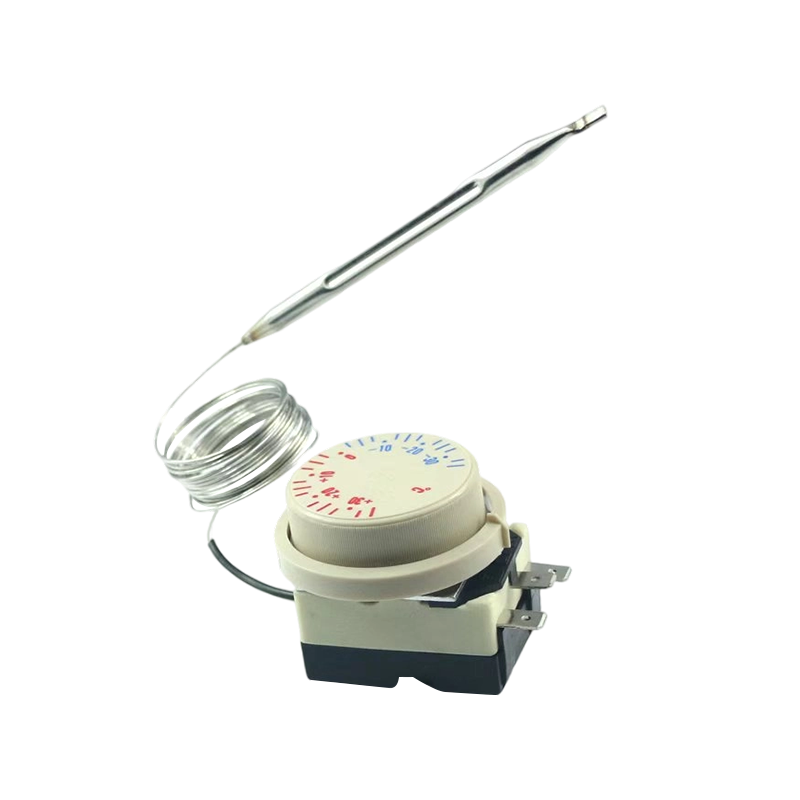
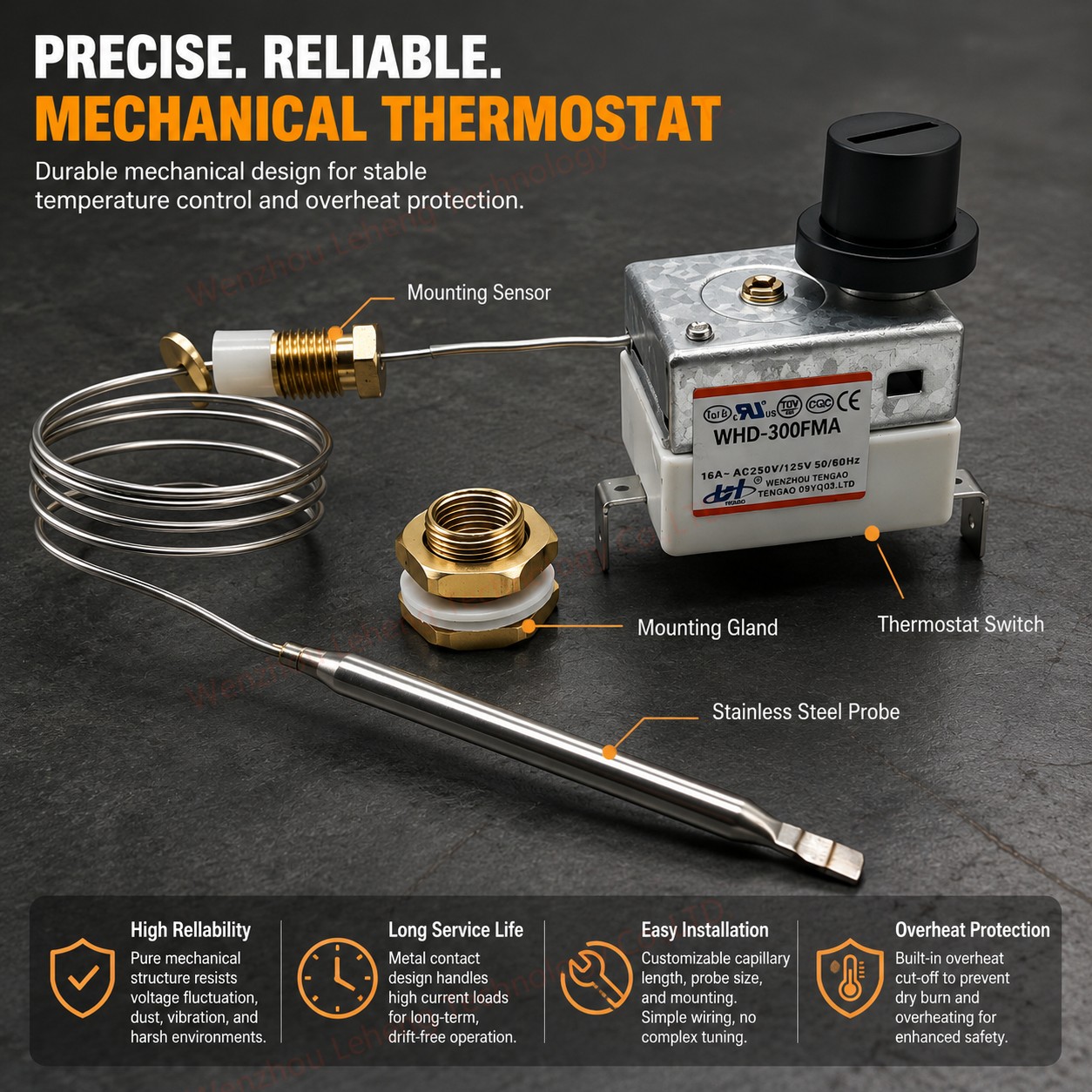
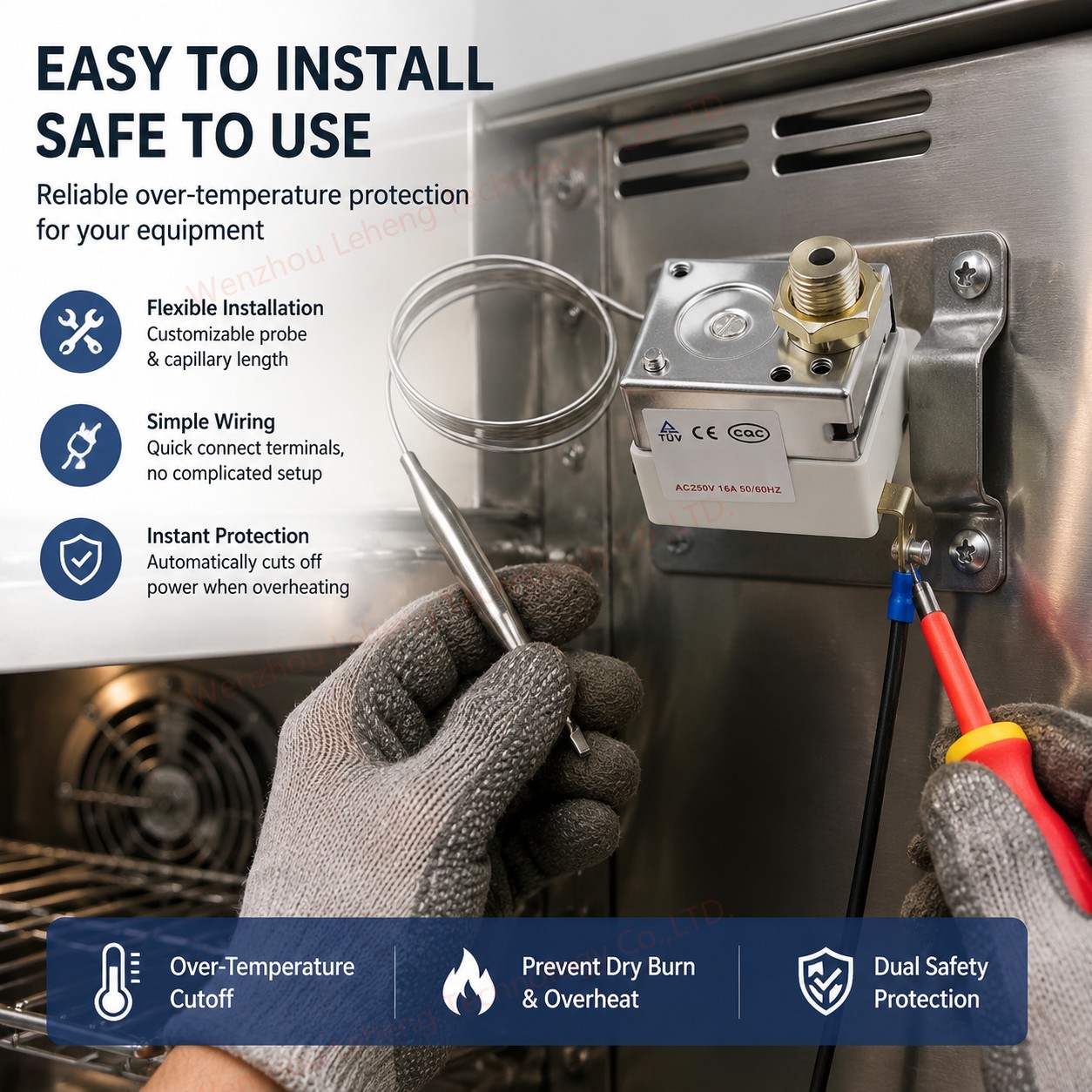
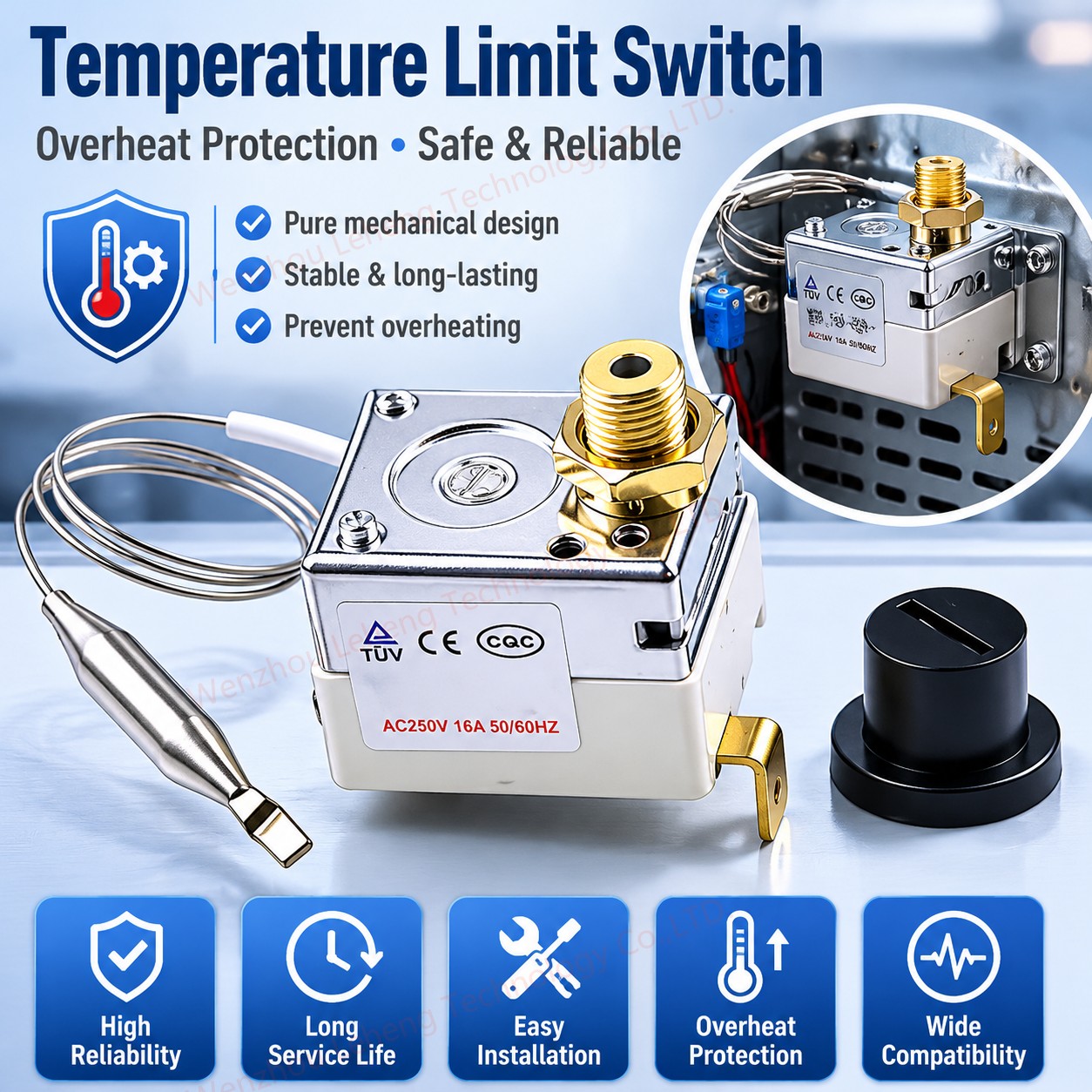
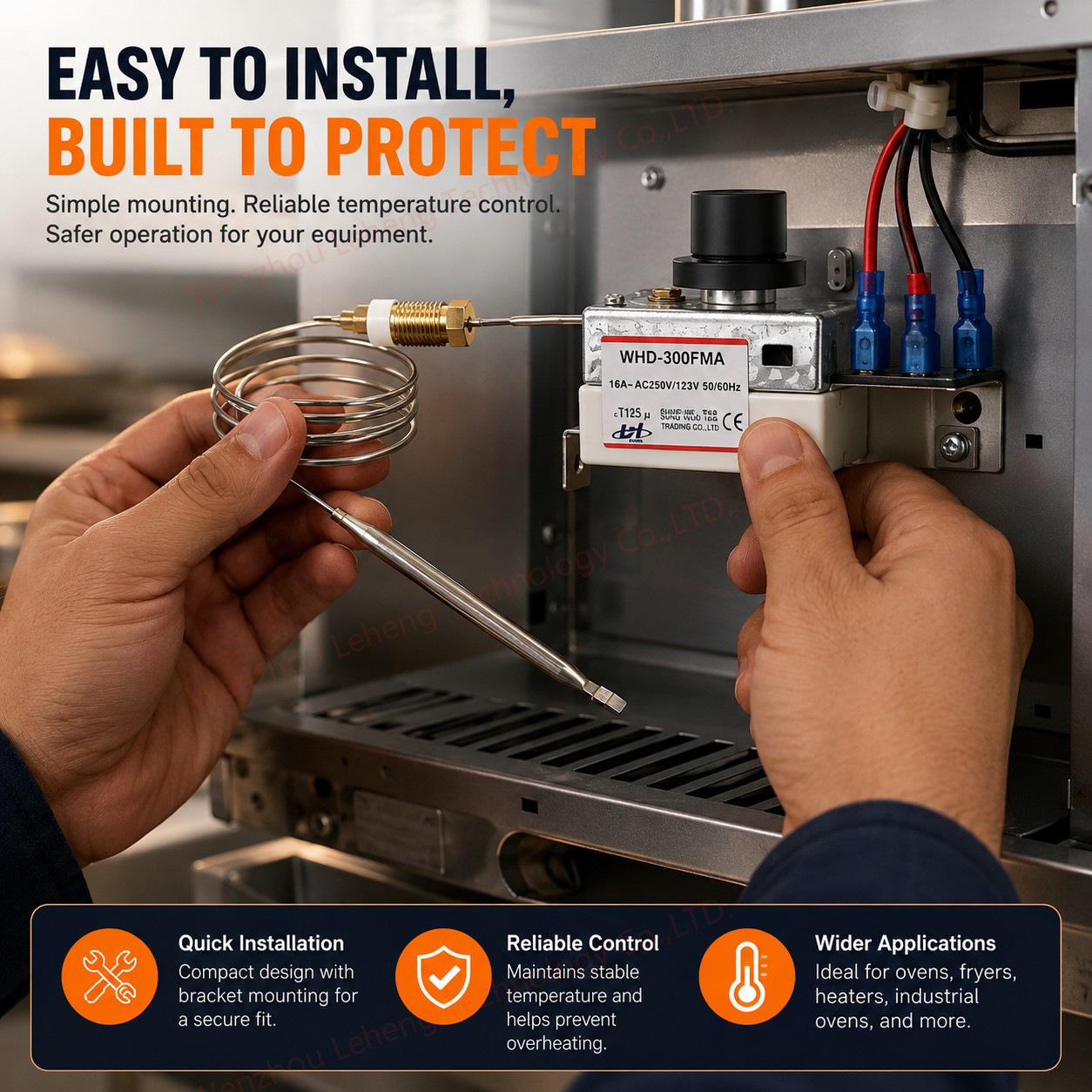
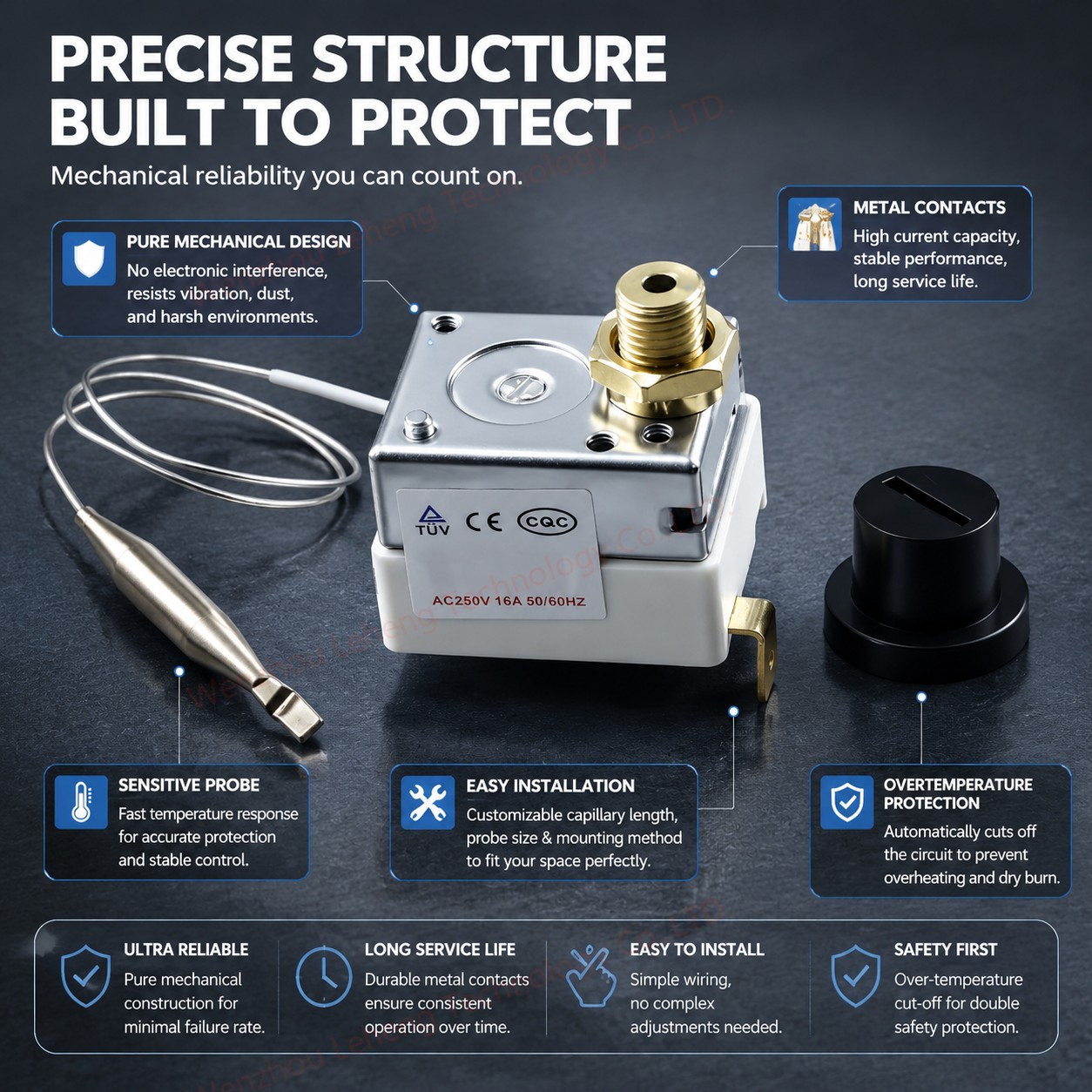
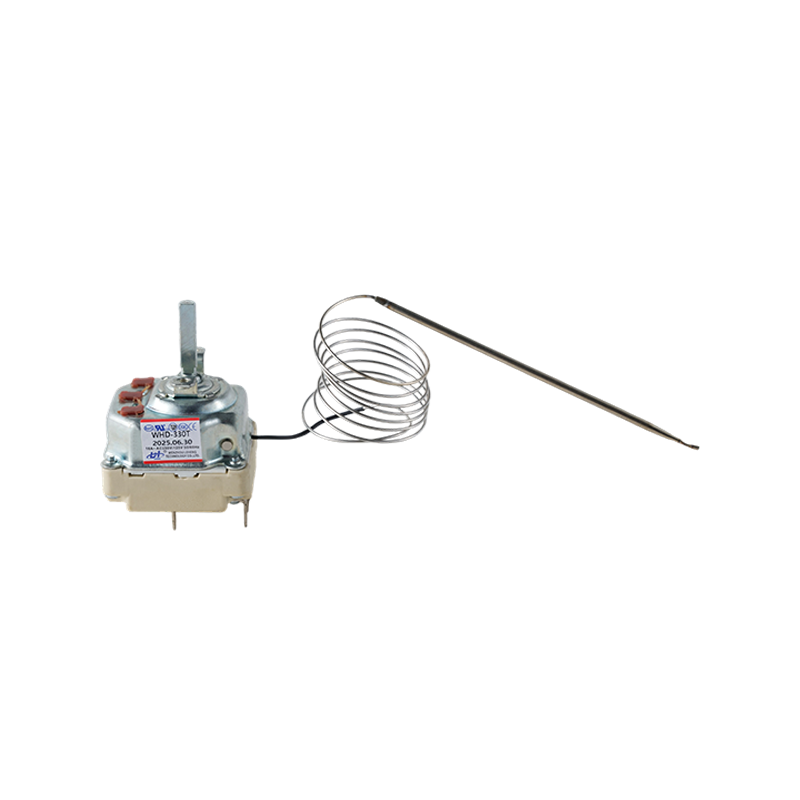
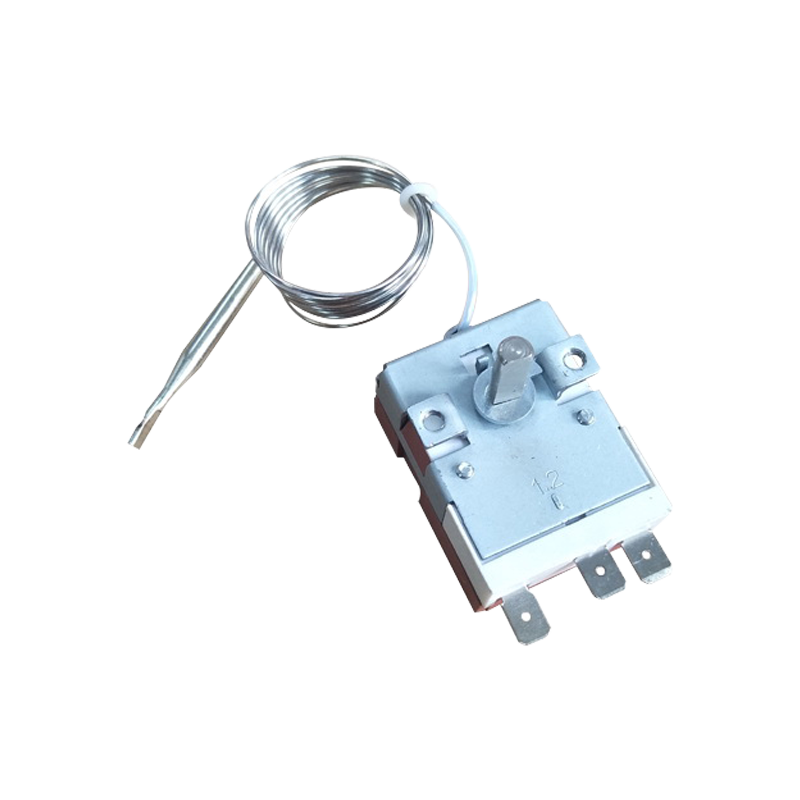
The sensing part is often a capillary thermostat structure. A bulb placed at the monitored point is linked to the switch by a thin tube filled with an expansion medium. When the bulb heats up, pressure travels through the tube and opens the contacts at the set temperature. Because the tube can be more than a meter long, the bulb can sit near the heat source while the switch body stays in a cooler, easier-to-reach position.
 |
 |
Common Trip Temperatures
The trip point of a thermal limiter must sit above the normal working temperature of the equipment but below the level at which parts or materials are at risk. Manual reset models are commonly supplied in these set points:
90°C, 110°C, 120°C, 150°C, 180°C, 200°C, 230°C, 250°C, 300°C, 320°C and 340°C
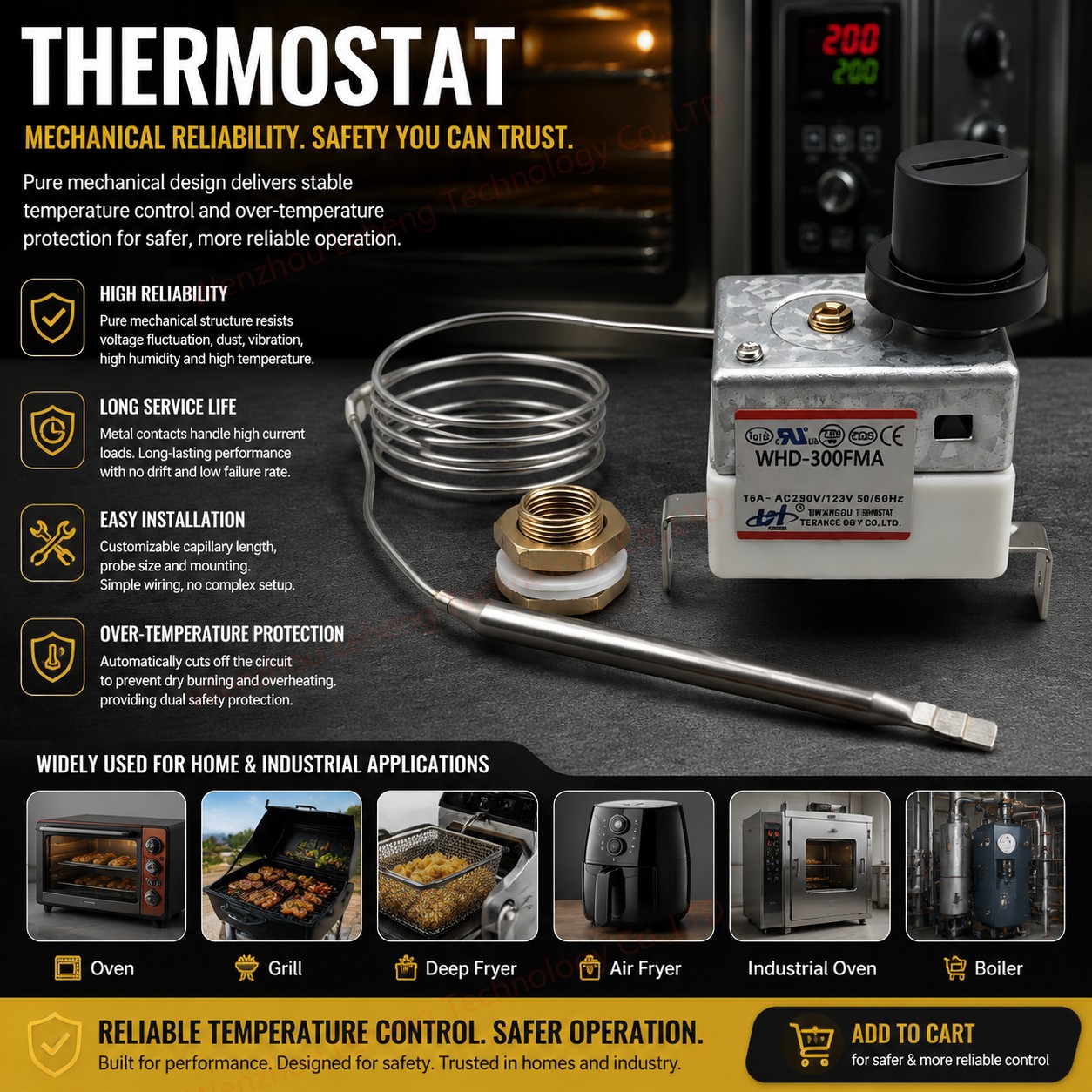
As a general reference, the lower values from 90°C to 120°C are often chosen for water heaters and low-temperature heating devices. The 150°C to 200°C range is typical for drying equipment, hot-air units and heating plates. The 230°C to 250°C range is often used with fryers and ovens, while 300°C to 340°C suits equipment that works at high temperatures, such as hot melt tools for PPR pipe welding and some commercial ovens. The exact choice depends on the working temperature, the heat-up behavior and the safety standard of each product.
 |
 |
Where Limit Protection Is Used
Typical equipment that carries a high-limit cutout includes:
- Electric ovens and hot-air cabinets, where it guards against dry heating and runaway temperature if the main control fails.
- Hot melt tools for PPR pipe welding, whose heating bases must not exceed a safe temperature.
- Electric fryers, where it cuts power when oil temperature goes beyond its working range.
- Instant and storage water heaters, which need dry-burning protection.
- Small industrial heaters, such as mold heaters, heating plates and food drying equipment.
 |
 |
Selection Points for Equipment Makers
Overseas purchasing engineers usually compare specific values first, so designers and buyers often check these points against the datasheet:
- Trip temperature. Choose from the set points listed above, with enough margin over the working temperature to avoid nuisance trips.
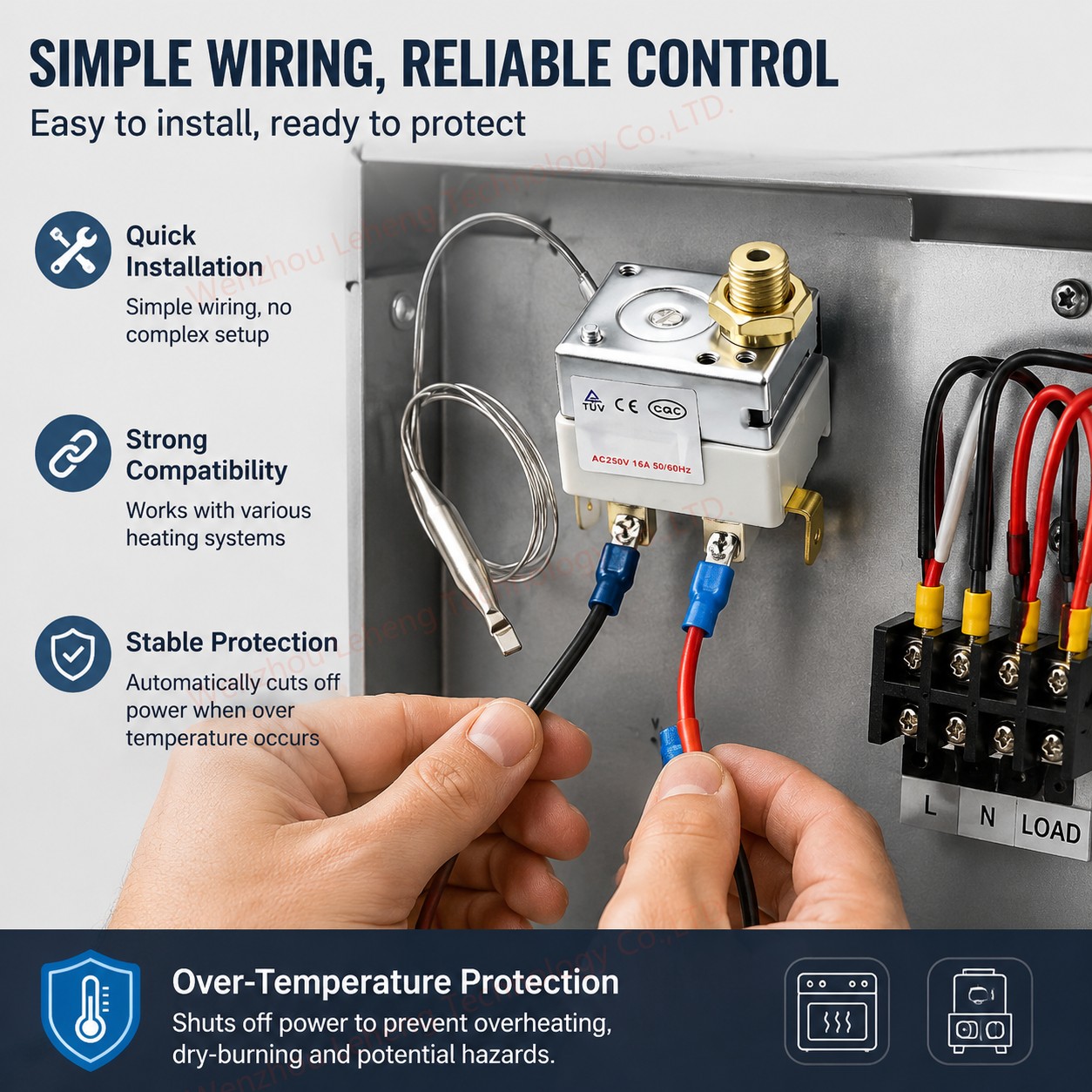
- Electrical rating. Rated current and voltage must match the heating load. A rating such as 16A 250VAC is commonly seen on this type of safety limiter, and the load should stay within the stated value.
- Bulb and capillary. Bulb diameter, tube length and tube material should fit the installation space and the heated medium. Listings often show values such as a 6mm bulb and a capillary length of 1500mm.
- Reset method. Manual reset suits equipment that should be inspected after an overheating event.
- Approvals. Certificates such as TUV, CE and CQC are often required by buyers in different markets.
- Service life. Mechanical life is usually given as a number of operations, for example more than 100,000 cycles.
 |
 |
What to Check After a Trip
When an over-temperature protector trips, resetting it without finding the cause only delays the next trip. Service teams commonly look at these items first:
- A failed or stuck main thermostat that no longer shuts off the heater
- Blocked airflow, a stopped fan or dirty vents
- Low oil or water level, or an empty heating chamber
- A bulb that has shifted from its intended position
- Wiring or relay faults that keep the heater energized
If the unit trips again right after reset, the equipment should stay out of service until the fault is found. Replacing the limiter with a higher-rated one to avoid trips removes the protection it was installed to give.
Supply for Equipment Makers
Wenzhou Leheng Technology Co., Ltd., established in 2012, develops and manufactures thermostats, temperature limiters, rocker switches and PCB thermostats. Its safety limiter range includes the manual reset thermostat, which uses a stainless steel capillary and is offered with OEM customization.
Engineers and buyers who are comparing high-temperature safety limiters can ask LEHENG's sales team for the technical datasheet, a quotation or test samples. Sending the target trip temperature, rated current, capillary length and expected order quantity with the inquiry helps the team recommend a matching model quickly, and custom set points or lead wires can be discussed at the same time.


PLEASE LEAVE YOUR SPECIFIC REQUIREMENT

QUICK LINKS
PRODUCTS
CONTACT
-
+86-15957748531
+86-15558959105
+86-19588099846
+86-18815077137 -
jilly@wzleh.com
east@wzleh.com
scott@wzleh.com
kim@wzleh.com
ADDRESS
- STI Park #B-2, Hongqiao Yueqing City, Zhejiang, China, 325608


Leheng Thermostat Factory
Copyright © Wenzhou Leheng Technology Co., Ltd. All Rights Reserved.