


 English
 Türk
SEARCH
HOT PRODUCTS
Newsletter
Thermostat Manual Reset for Oil and Steam Equipment
A Thermostat Manual Reset device is used in heating equipment where temperature protection requires manual intervention after the switching mechanism has operated. For commercial kitchen appliances and industrial heating systems, the probe mounting method is an important consideration, especially when the sensing point is exposed to oil, water, or steam. Threaded installation with a sealing gasket can help address the mounting requirements of equipment with dedicated probe openings.
Why Threaded Probe Installation Matters
Some temperature limiters use a probe that contacts the equipment surface, while others are installed through an opening in a tank or heating chamber. The WHD-300FMA-NUT capillary temperature limiter features a brass threaded locking nut and a sealing gasket. This structure allows the probe to be screwed into a compatible opening rather than relying on surface contact alone.
For a Thermostat Manual Reset component installed in a liquid-containing chamber, the mounting interface needs to match the equipment opening and sealing requirements. The brass nut secures the threaded installation, while the gasket helps reduce leakage around the mounting point. Correct installation is particularly relevant when the probe is exposed to cooking oil, hot water, or steam.
Manual Reset Protection at High Temperatures
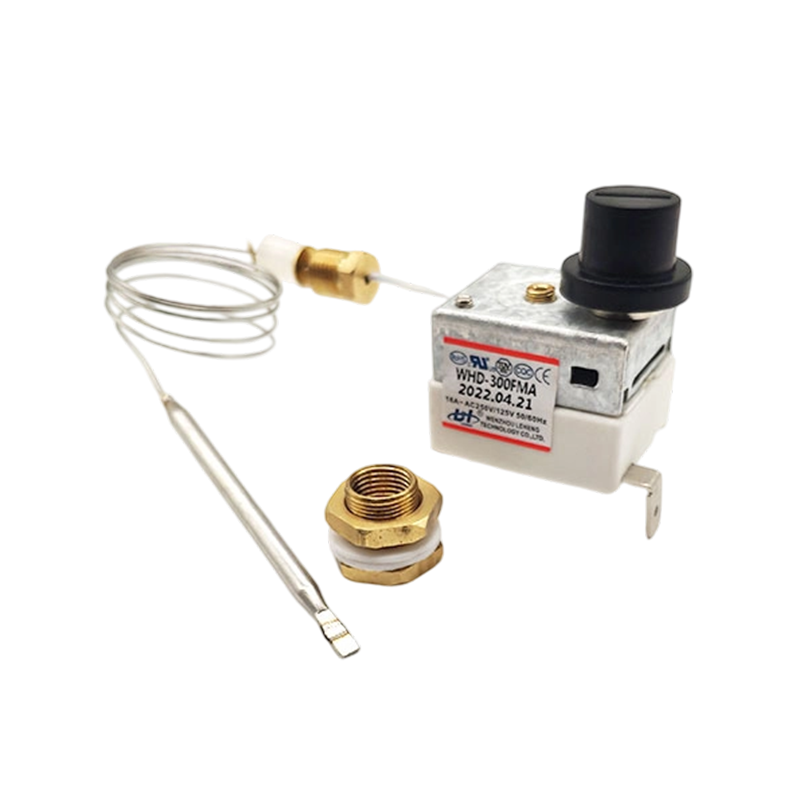
The WHD-300FMA-NUT is a capillary temperature limiter with a rated temperature of up to 300°C and a manual reset function. When the temperature reaches the limiter's operating threshold, its switching mechanism interrupts the controlled circuit. After the temperature condition has been addressed and the unit has cooled as required, manual resetting restores operation according to the component's specifications.
Unlike an automatically resetting thermostat, a Thermostat Manual Reset model requires an operator or technician to take action before heating resumes. This operating arrangement is relevant to equipment where an over-temperature event should prompt inspection rather than immediate automatic restart. The limiter's temperature rating, electrical capacity, and reset conditions should be matched to the equipment's protection requirements.
Applications in Commercial Fryers and Cooking Equipment
Commercial electric fryers are a key application for threaded capillary limiters. The probe can be installed through a suitable opening in the oil tank, allowing the sensing section to extend into the intended measurement area. The threaded nut and gasket help seal the installation point against oil leakage when correctly matched and installed.
Other potential applications include commercial steam ovens, combination steam ovens, and industrial thermal-oil heating equipment. These systems may expose the probe mounting area to high temperatures, moisture, or heated liquids. A Thermostat Manual Reset component with a threaded mounting arrangement can be considered where the equipment structure requires an inserted probe and a sealed opening.
Large commercial water heaters, pressurized water equipment, food-drying machines, stockpots and soup kettles may also require temperature-limiting components. Suitability depends on the operating temperature, pressure, medium, electrical requirements, and mounting configuration of each machine.
Threaded and Surface-Mounted Limiters
The main difference between the threaded WHD-300FMA-NUT and a non-threaded surface-mounted version is the installation method.
A surface-mounted limiter uses contact between the probe and the equipment surface to sense temperature. This arrangement can suit dry heating environments, including certain heat-sealing machines and conventional ovens, where the sensing point is designed for surface contact.
The threaded version uses a brass locking nut and sealing gasket to secure the probe through an equipment opening. It is more relevant when the sensing probe needs to enter an oil or water chamber or when the mounting point is exposed to steam. For buyers evaluating a Thermostat Manual Reset limiter, the choice should follow the actual probe position and sealing requirements rather than appearance alone.
What Buyers Should Confirm Before Selection
When sourcing the WHD-300FMA-NUT or a similar capillary temperature limiter, purchasing teams and equipment manufacturers should review several technical details:
Mounting thread: Confirm the thread specification and compatibility with the equipment opening.
Sealing arrangement: Check the gasket dimensions, material suitability, and installation conditions.
Temperature rating: Verify that the 300°C rating is appropriate for the intended application.
Probe placement: Determine the required insertion depth and the position where temperature must be sensed.
Capillary routing: Confirm that the tube length and routing fit the equipment layout without damaging or sharply bending the tube.
Electrical ratings: Match the switching capacity to the intended control circuit and load.
Reset requirements: Establish the conditions under which manual resetting is permitted after an over-temperature event.
These checks help buyers assess whether the component's mounting structure and operating characteristics fit the intended equipment.
WHD-300FMA-NUT for Sealed Probe Installation
The WHD-300FMA-NUT combines a manual reset capillary temperature limiter rated up to 300°C with a brass threaded nut and sealing gasket. Its mounting structure is intended for applications where the probe must pass through an equipment opening, including selected commercial cooking appliances and industrial liquid-heating systems.
For equipment manufacturers, selecting a Thermostat Manual Reset limiter involves considering both the temperature-protection function and the mechanical interface. Matching the thread, seal, probe position, and electrical ratings to the machine helps establish a suitable component specification for production and equipment integration.
OUR PRODUCTS
Recommended Products



PLEASE LEAVE YOUR SPECIFIC REQUIREMENT

QUICK LINKS
PRODUCTS
CONTACT
-
+86-15957748531
+86-15558959105
+86-19588099846
+86-18815077137 -
jilly@wzleh.com
east@wzleh.com
scott@wzleh.com
kim@wzleh.com
ADDRESS
- STI Park #B-2, Hongqiao Yueqing City, Zhejiang, China, 325608


Leheng Thermostat Factory
Copyright © Wenzhou Leheng Technology Co., Ltd. All Rights Reserved.